web scraping seo research — How Web Scraping Powers Modern SEO Research (Real Case Study)
Web scraping has transitioned from a niche developer skill to the backbone of modern search engine optimization, allowing agencies to move beyond surface-l…
In this article
- The Architecture of SEO Data Extraction
- Scraping for Keyword Gap Analysis
- Python Snippet: Basic SERP Extraction
- Performance Benchmarks for SEO Scraping
- Case Study: Reclaiming Lost Rankings in the VPN Niche
- The Findings
- The Implementation
- Scaling SEO with Residential Proxies
- Ranking Accuracy Percentages
- Technical SEO Auditing via Headless Browsers
- Integration with Professional SEO Tools
- Recommended Deals
- Advanced Data Cleansing and Analysis
- Ethical Considerations and Best Practices
- FAQ
- Is web scraping for SEO legal?
- Why do I need residential proxies for SEO?
- How often should I scrape my keyword rankings?
- Can I scrape Google without a proxy?
Web scraping has transitioned from a niche developer skill to the backbone of modern search engine optimization, allowing agencies to move beyond surface-level keyword metrics into deep, competitive intelligence. By programmatically extracting data from Search Engine Results Pages (SERPs), social signals, and competitor site structures, SEO professionals can identify ranking patterns that manual browsing would never reveal. This guide explores the technical architecture of SEO scraping and demonstrates how high-quality proxy infrastructure transforms raw data into actionable growth strategies.
The Architecture of SEO Data Extraction
Modern SEO research requires more than just a simple crawler; it demands a sophisticated pipeline capable of bypassing anti-bot measures while maintaining data integrity. At the core of this pipeline is the request coordinator, which manages how your scraper interacts with target domains like Google, Bing, or Amazon. Because search engines are hyper-sensitive to automated traffic, the "request footprint" must look identical to a legitimate human user.
Text alternative
graph TD
    A[Scraper Logic] --> B{Proxy Manager}
    B --> C[Residential IPs]
    B --> D[Datacenter IPs]
    C --> E[Google Search SERP]
    D --> F[Competitor CSS/HTML]
    E --> G[Data Parser]
    F --> G
    G --> H[SQL Database/SEO Tool]
    H --> I[Strategy Report]
When building this architecture, the choice of IP address is the most critical variable. Datacenter proxies are cost-effective for scraping static competitor pages or checking site headers, but for the actual SERP data, residential proxies are non-negotiable. Using a 20% off all residential proxies deal can significantly lower the overhead of large-scale rank tracking. These residential IPs are sourced from real household devices, making them nearly impossible for search engines to distinguish from genuine searchers, thus preventing the dreaded "CAPTCHA loop."
Scraping for Keyword Gap Analysis
Traditional keyword research often relies on "seed" keywords, but web scraping allows for a reverse-engineered approach. By scraping the top 50 results for a broad industry term, you can extract every internal link and outbound anchor text from the ranking pages. This provides a map of the "semantic cluster" the search engine expects to see.
For instance, if you are targeting the "managed cloud hosting" niche, a scraper can pull the H1, H2, and meta descriptions of the top-ranking competitors. By running this data through a simple Natural Language Processing (NLP) script, you can identify "entities" rather than just keywords. Search engines like Google are moving toward entity-based indexing, where the relationship between words (e.g., "scalability," "latency," "uptime") matters more than the density of a specific phrase.
Python Snippet: Basic SERP Extraction
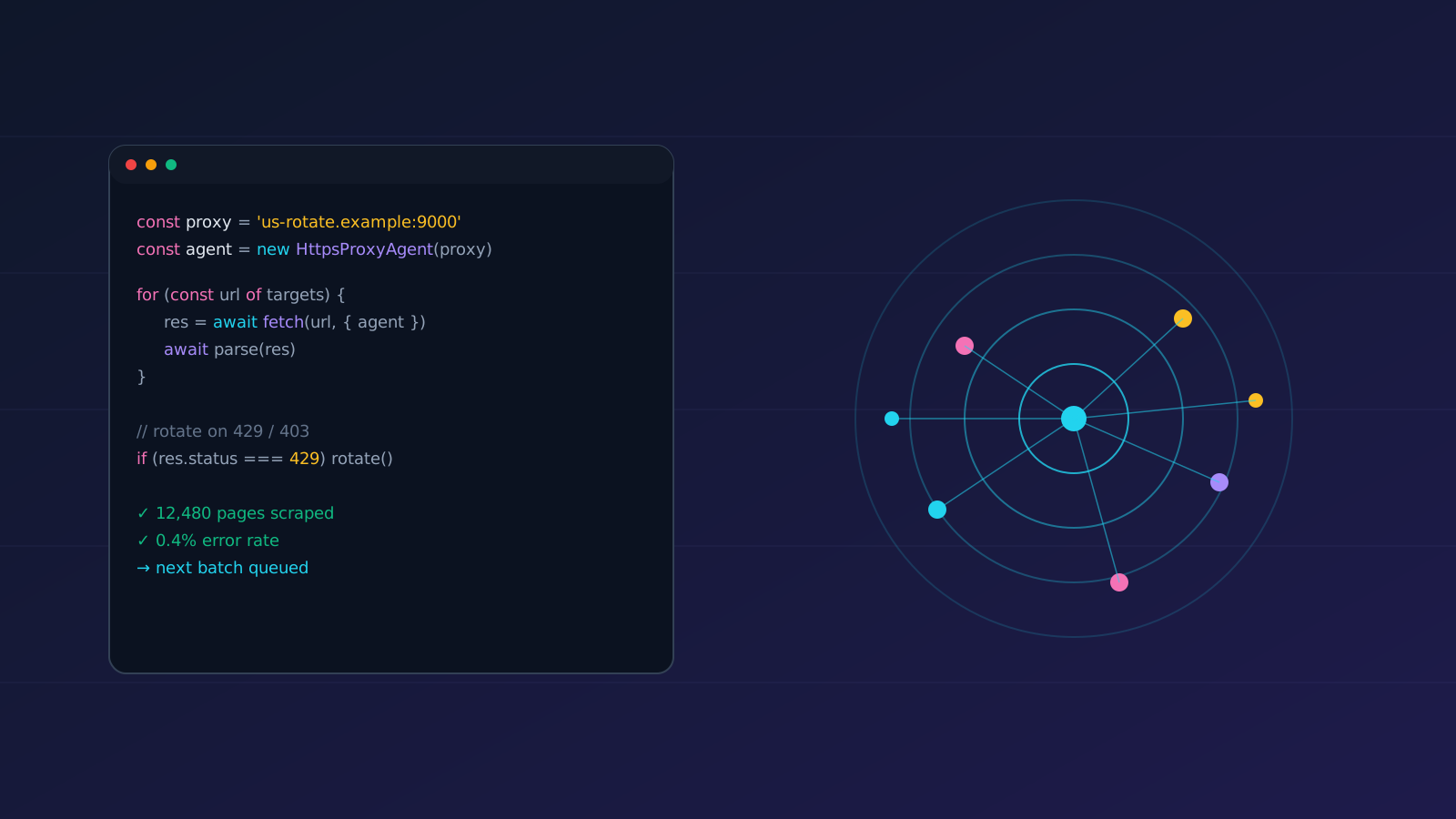
Below is a conceptual example of how to structure a request using Python's requests library combined with a rotating proxy endpoint to gather SEO metadata.
import requests

# Your proxy credentials from a provider like Bright Data or Smartproxy
proxy_url = "http://username:password@gateway.proxyprovider.com:8000"
proxies = {"http": proxy_url, "https": proxy_url}

target_url = "https://www.google.com/search?q=best+enterprise+proxies+2024"
headers = {
    "User-Agent": "Mozilla/5.0 (Windows NT 10.0; Win64; x64) AppleWebKit/537.36 (KHTML, like Gecko) Chrome/119.0.0.0 Safari/537.36"
}

try:
    response = requests.get(target_url, proxies=proxies, headers=headers, timeout=10)
    if response.status_code == 200:
        print("Successfully captured SERP HTML")
        # Insert BeautifulSoup parsing logic here
except Exception as e:
    print(f"Connection failed: {e}")
Performance Benchmarks for SEO Scraping
Not all proxy types perform equally when tasked with SEO research. While datacenter proxies offer high speeds, their high block rate on Google makes them inefficient for SERP analysis. Residential and Mobile proxies provide the highest success rates but at a higher cost per gigabyte.
| Proxy Type | Success Rate (SERP) | Avg. Latency | Best Use Case | Risk Level |
|---|---|---|---|---|
| Datacenter | 15-25% | 150ms | Technical Audits | High |
| Residential | 92-98% | 1.2s | Rank Tracking | Very Low |
| Mobile (4G/5G) | 99% | 2.5s | Local SEO GMB | Zero |
| ISP Proxies | 85-90% | 400ms | Social Media SEO | Low |
For those looking to scale their research without building custom infrastructure, platforms like Semrush provide pre-scraped data through massive proprietary databases. However, custom scraping remains superior for real-time monitoring of specific niche keywords where generic tools might have a data refresh lag of 3-7 days.
Case Study: Reclaiming Lost Rankings in the VPN Niche
A mid-sized affiliate site specializing in VPN reviews saw a 40% drop in organic traffic following a core algorithm update. Standard SEO tools showed a decline in rankings but didn't explain the "why." To solve this, the team deployed a custom scraper to monitor the localized SERPs in 15 different countries.
The Findings
The scraper revealed that Google had shifted the intent of the primary keywords from "commercial/transactional" to "informational." The top five results were no longer "Best VPN" lists, but rather "How to set up a VPN" guides. Furthermore, the scraper identified that the winning pages all had an average of 12% more technical schema markup than the affiliate site.
The Implementation
By using highly specialized proxy trust solutions to rotate through local residential IPs, the team was able to view the SERP exactly as a user in London, Tokyo, or New York would. They discovered that localized competitors were gaining ground by mentioning specific regional streaming services.
Key Metrics Tracked During Recovery:
- DOM Load Times: Scraped from top competitors to set a performance baseline.
- Backlink Velocity: Monitoring how fast competitors gained new links using detailed proxy IP insights.
- Content Delta: A line-by-line comparison of updated competitor articles versus the site's own static content.
After three months of implementing these data-driven changes, the site regained 85% of its original traffic. This level of precision is only possible when you own your data extraction process.
Scaling SEO with Residential Proxies
To truly dominate search results, you must scale your data collection. This involves scraping thousands of URLs daily. When operating at this scale, the traditional "linear" scraping model fails. You need a distributed system that can handle concurrent requests across different geographical regions.
Using a provider from a reputable proxy list allows you to target specific cities. This is vital for "Local SEO" research. If you are managing a franchise with 500 locations, you need to know how each location ranks in its specific zip code. A residential proxy pool with city-level targeting allows your scraper to mimic a local searcher, giving you an accurate look at the "Local Pack" or "Map Pack" results.
Ranking Accuracy Percentages
- Static IP Scraping: 45% accuracy (often served cached or "personalized" results based on the DC location).
- Rotating Residential Scraping: 98% accuracy (results match what a real user sees).
- Headless Browser Scraping: 99.5% accuracy (handles JavaScript-heavy SERP features like "People Also Ask").
Technical SEO Auditing via Headless Browsers
While basic HTML scraping is fast, many modern sites use React, Vue, or Angular, meaning the SEO content is injected via JavaScript after the page loads. To scrape these sites for technical audits, you must use a headless browser like Playwright or Puppeteer.
A headless browser renders the full page, executes JavaScript, and then allows you to inspect the resulting DOM. This is essential for detecting "Client-Side Rendering" (CSR) issues that might prevent Googlebot from indexing your content. By scraping your own site and comparing it to what Ahrefs sees, you can identify discrepancies in how search engines perceive your architecture.
When scraping at this level, consider using optimized VPS hosting for proxies to ensure your scraper has the CPU and RAM necessary to run multiple headless browser instances simultaneously. A single Chrome instance can consume up to 150MB of RAM; scaling this to 100 concurrent threads requires a robust server environment.
Integration with Professional SEO Tools
Web scraping doesn't replace tools like Bright Data or Oxylabs; it enhances them. For example, you can use a custom scraper to identify "broken link building" opportunities by crawling high-authority resource pages in your niche. Once the scraper identifies a 404 error, you can use specialized SEO tools to find who else was linking to that dead resource.
The synergy between custom scraping and established software creates a moat around your SEO strategy. Large-scale providers like Smartproxy and IPRoyal offer APIs that integrate directly into your custom scripts, allowing you to pull data without worrying about proxy rotation or header management.
Recommended Deals
- Semrush 14-Day Pro Trial — Access world-class SEO data and competitor analytics for two weeks free.
- Ahrefs Starter Plan — The essential toolkit for backlink analysis and site auditing at a competitive monthly rate.
- 20% Off All Residential Proxies — Save on the most reliable IP type for SERP scraping and rank tracking.
Advanced Data Cleansing and Analysis
Once you have successfully scraped the data, the real work begins: cleansing. Raw HTML is messy. You will encounter character encoding issues, hidden "honeypot" links designed to trap bots, and inconsistent data formats.
- Normalization: Ensure all URLs are in a canonical format (e.g., stripping UTM parameters).
- Deduplication: Removing identical SERP entries that may appear due to proxy rotation overlap.
- Sentiment Analysis: Running the scraped snippets through a machine learning model to determine the "tone" of the top-ranking content.
- Correlation Coefficients: Calculating the relationship between word count, image alt tags, and final ranking position.
By focusing on these metrics, you move from "guessing" what works to "knowing" based on a statistically significant dataset. For example, you might find that in the "personal finance" niche, the top 3 results always include a table of contents and at least two bulleted lists. This information allows your content team to produce perfectly optimized drafts every time.
Ethical Considerations and Best Practices
While web scraping is legal in most jurisdictions for publicly accessible data (as confirmed by the HiQ vs. LinkedIn case), it is vital to be a "good citizen" of the web.
- Respect Robots.txt: Unless absolutely necessary, follow the crawling instructions provided by the site owner.
- Limit Request Rate: Don't hammer a small competitor's server with 100 requests per second. Use a reasonable delay.
- User-Agent Accuracy: Use real, modern User-Agent strings to ensure you are receiving the same content as a human visitor.
- Data Privacy: Never scrape behind logins or collect personally identifiable information (PII) without consent.
By following these guidelines, you ensure that your scraping operations remain sustainable and don't lead to permanent IP bans or legal complications.
FAQ
Is web scraping for SEO legal?
Yes, scraping publicly available information from search engines and websites is generally legal for research and competitive analysis. However, you should always check the Terms of Service of specific sites and avoid scraping copyrighted or private data.
Why do I need residential proxies for SEO?
Search engines like Google use sophisticated bot detection. Datacenter IPs are easily identified as belonging to a server, whereas residential IPs appear to be real users. This significantly reduces the number of CAPTCHAs you encounter and prevents IP blocking.
How often should I scrape my keyword rankings?
For highly competitive niches, daily scraping is recommended to catch "Google Dances" and algorithm tweaks. For more stable industries, a weekly crawl is usually sufficient to track trends without overspending on proxy bandwidth.
Can I scrape Google without a proxy?
While possible for a handful of requests, Google will quickly flag your home or office IP address, resulting in a temporary ban. This can disrupt your normal browsing and search experience, making proxies essential for any meaningful volume of data.
The landscape of SEO is increasingly data-driven. By building a custom scraping pipeline, you gain a level of transparency into search algorithms that third-party tools simply cannot match. Whether you are conducting a massive keyword gap analysis or monitoring localized SERPs for a global brand, the combination of high-quality residential proxies and intelligent extraction scripts is the ultimate competitive advantage. For the best rates on the infrastructure needed to power these insights, visit our coupons page and secure the tools your agency needs to stay ahead of the curve.
Get the weekly ProxyPromo brief
Fresh deals, hand-tested codes and honest reviews — every Friday. No spam.