Sneaker Proxies Explained: How Copping Bots Really Work
The competitive world of limited-edition footwear has evolved from physical queues outside storefronts into a high-stakes digital arms race. At the heart o…
In this article
- The Mechanics of Sneaker Bottling and IP Rate Limiting
- The Architecture of a Proxy Request
- Residential vs. Datacenter vs. ISP Proxies
- Comparison Table: Proxy Types for Sneaker Drops
- How Bots Execute Checkout with Proxies
- Bypassing Anti-Bot Measures: Beyond the IP
- Geolocation and Latency Optimization
- Strategic Recommendations and Coupon Deals
- Setting Up a Sneaker Proxy: Step-by-Step
- The Future of Sneaker Proxies: AI and Behavioral Analysis
- Frequently Asked Questions
- What happens if my sneaker proxies get "clipt"?
- Are free proxies worth using for sneaker drops?
- How much bandwidth do sneaker proxies consume?
- Can I use a VPN instead of sneaker proxies?
- Conclusion
The competitive world of limited-edition footwear has evolved from physical queues outside storefronts into a high-stakes digital arms race. At the heart of this ecosystem lies a specific technology: sneaker proxies. To the uninitiated, these are merely intermediary servers, but for professional resellers, they are the vital infrastructure that bypasses anti-bot measures, prevents IP bans, and captures inventory within milliseconds. Understanding how sneaker proxies function requires a deep dive into the intersection of networking protocols, browser automation, and the defense mechanisms employed by retailers like Nike (SNKRS), Adidas (Confirmed), and Shopify-based boutiques.
The Mechanics of Sneaker Bottling and IP Rate Limiting
When a high-demand silhouette drops, thousands of users attempt to access the same product page simultaneously. Retailers use advanced web application firewalls (WAFs) and bot mitigation services like Akamai, Datadome, and PerimeterX to filter traffic. These systems look for "sub-human" speeds and repetitive patterns coming from the same IP address.
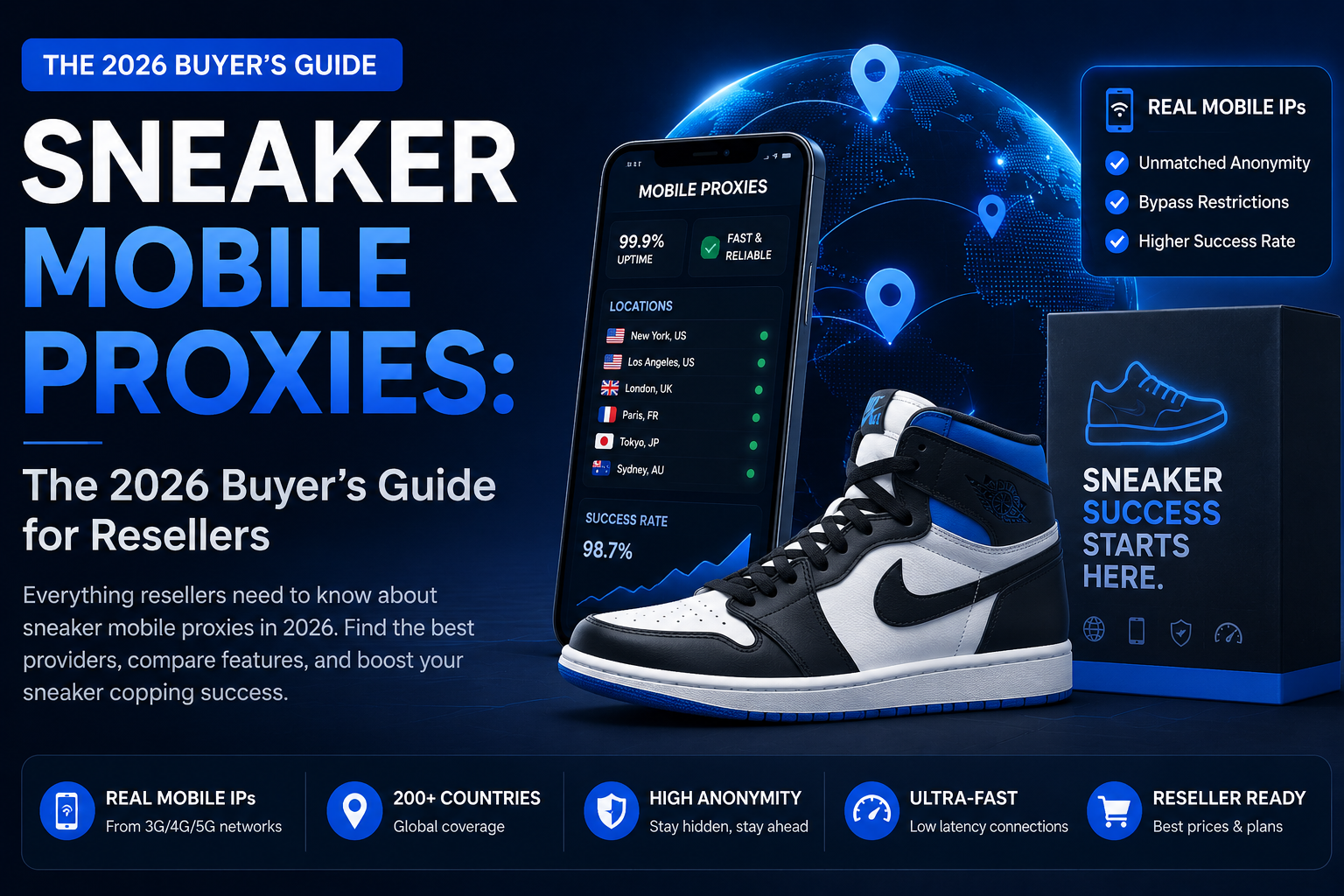
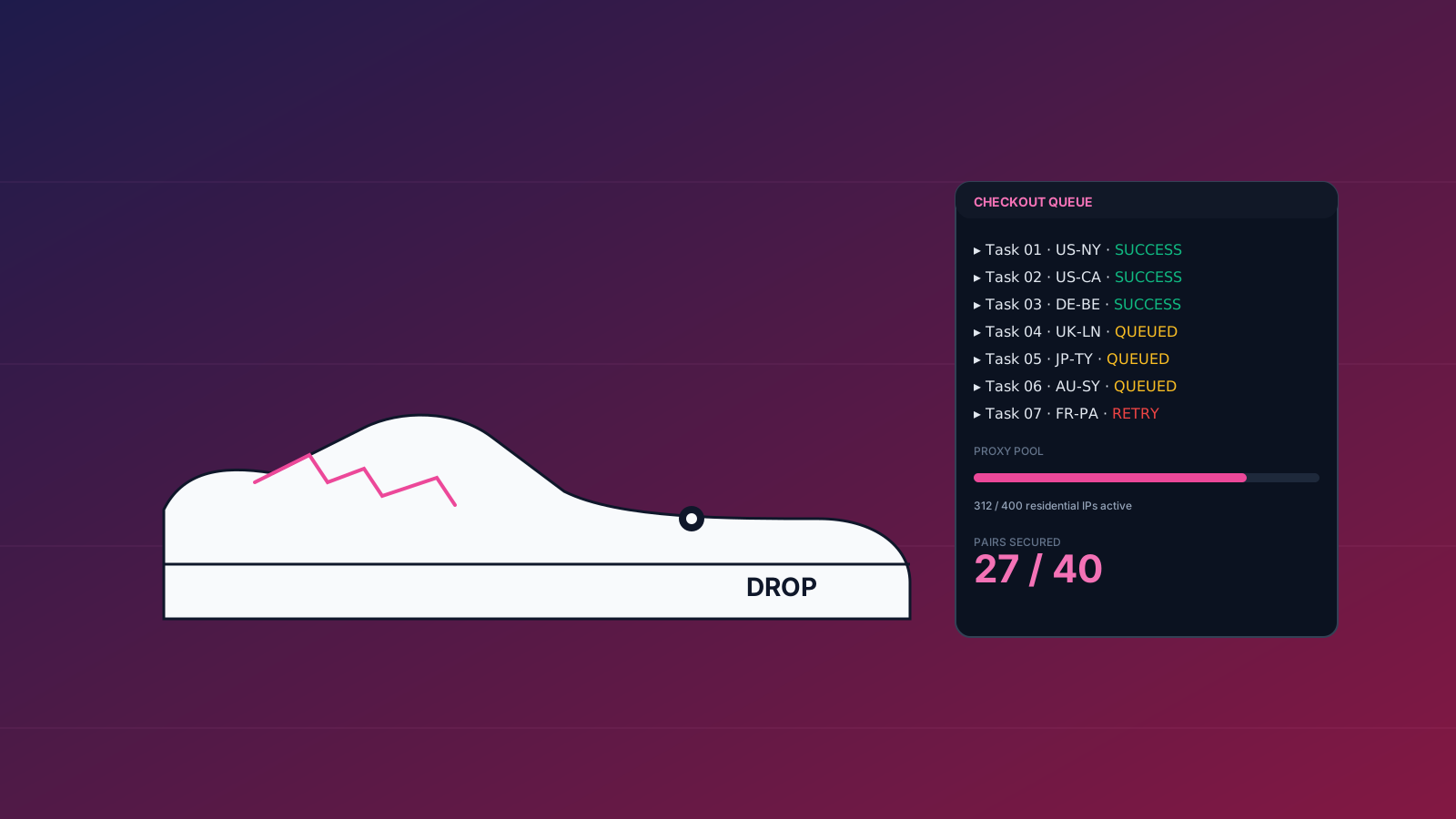
A "sneaker bot"—software like Wrath, MEKPreme, or Kodai—automates the checkout process by sending HTTP requests directly to the store’s backend. If a single IP address sends 50 requests in one second to add an item to a cart, the retailer will immediately flag and "soft ban" that address, 403 Forbidden errors will populate, and the user is locked out. Sneaker proxies solve this by assigning a unique, high-authority IP to every single task the bot runs. If you are running 100 tasks to buy the latest Yeezy or Jordan release, you need 100 distinct proxies to ensure the retailer sees 100 "unique" customers rather than one bot.
The Architecture of a Proxy Request
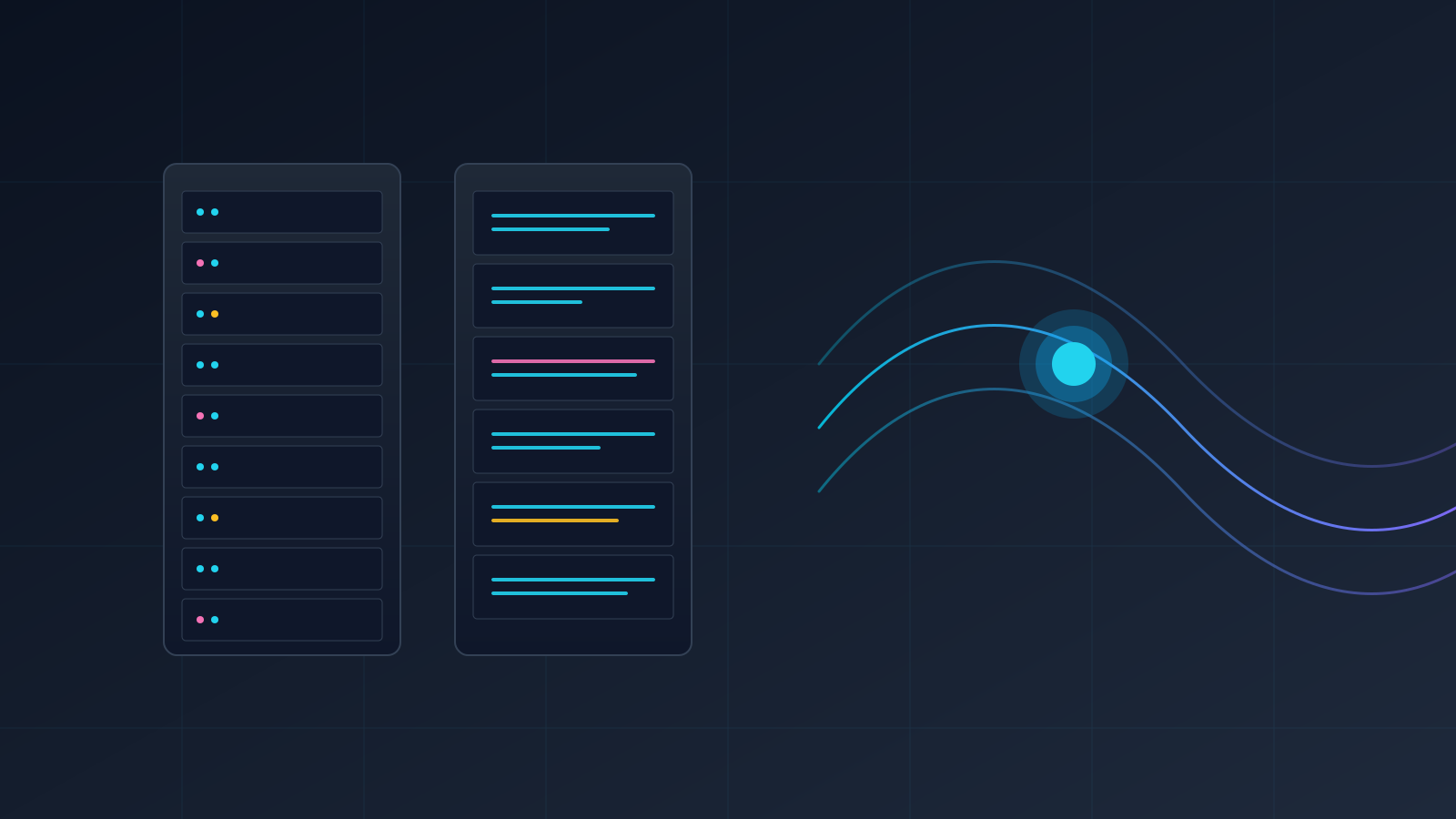
When a sneaker bot uses a proxy, the data flow follows a specific path designed to mask the origin. Using a fast residential proxy is preferred because these IPs are associated with real home internet service providers (ISPs) like Comcast or Verizon, making them indistinguishable from legitimate shoppers.
Text alternative
graph LR
    A[Sneaker Bot] -->|Authenticated Request| B(Proxy Gateway)
    B -->|Rotates to| C{IP Pool}
    C -->|Residential IP 1| D[Nike/Shopify Server]
    C -->|Residential IP 2| D
    C -->|Residential IP 3| D
    D -->|Success/Failure| B
    B -->|Response| A
Residential vs. Datacenter vs. ISP Proxies
Choosing the right type of proxy is the difference between a "Check out Successful" notification and a string of "Payment Failed" errors.
Residential Proxies
Residential proxies are the gold standard for sneaker copping. These are IP addresses assigned by ISPs to homeowners. Because they are tied to real physical locations, they have the highest trust score. On sites with aggressive bot protection like Adidas or Yeezy Supply, residential proxies are mandatory. They are usually sold by the gigabyte (data usage) rather than the number of IPs. You can find high-quality options via this 20% discount on all residential proxies.
Datacenter Proxies
These IPs are generated in bulk within server farms (AWS, Google Cloud). They offer incredible speed—often sub-10ms response times—but low "trust." Retailers can easily identify the IP ranges of major data centers and block them entirely. However, they are still useful for "monitoring" tasks where you need to scrape a site continuously to see when a product goes live.
ISP Proxies (Static Residential)
ISP proxies are a hybrid. They are hosted in datacenters but registered under consumer ISP names. They offer the speed of a server and the trust of a home connection. These are generally the most expensive and are highly sought after for Shopify drops where speed is the primary factor.
Comparison Table: Proxy Types for Sneaker Drops
| Feature | Residential Proxies | Datacenter Proxies | ISP/Static Proxies |
|---|---|---|---|
| Source | Real Households | Server Farms | Data Centers (ISP Tagged) |
| Speed | 200ms - 800ms | 10ms - 50ms | 20ms - 100ms |
| Detection Risk | Very Low | High | Medium/Low |
| Success Rate | High (Nike/SNKRS) | Low (Most Sites) | High (Shopify/Supreme) |
| Cost Basis | Per GB (Bandwidth) | Per IP / Per Month | Per IP |
| Best Used For | Raffles & Mesh Sites | Monitoring Stock | Shopify & Initial Drops |
How Bots Execute Checkout with Proxies
Modern sneaker bots utilize a variety of checkout methods, each interacting with proxies differently.
- Request-Based (CLI): These bots don't render a browser. They send the raw
JSONorform-datapayloads to the store's API. This is the fastest method but requires the highest quality proxies. - Browser/Puppeteer Based: Bots like Balsane launch a headless Chrome instance for each task. This consumes more RAM and bandwidth but is harder for security systems like Cloudflare to detect because the "fingerprint" looks exactly like a human user.
- Hype-Drops (Queue Bypass): On sites like Shopify, bots use proxies to hold a position in the "Queue." If you have 50 proxies, you have 50 spots in line, significantly increasing your chances of reaching the payment page before stock expires.
For developers interested in how these requests are structured in a bot environment, here is a Python snippet using the requests library and a proxy with authentication:
import requests

# Example of a static ISP proxy configuration
proxy_host = "isp-proxy-provider.com"
proxy_port = "12345"
proxy_user = "username_res_country-us"
proxy_pass = "password_auth_123"

proxies = {
    "http": f"http://{proxy_user}:{proxy_pass}@{proxy_host}:{proxy_port}",
    "https": f"http://{proxy_user}:{proxy_pass}@{proxy_host}:{proxy_port}"
}

url = "https://www.nike.com/launch"

try:
    response = requests.get(url, proxies=proxies, timeout=5)
    print(f"Status: {response.status_code} - Accessed via Proxy")
except Exception as e:
    print(f"Proxy Failed: {e}")
Bypassing Anti-Bot Measures: Beyond the IP
Proxies are only one piece of the puzzle. To successfully purchase limited inventory, botters must synchronize their proxies with other technologies. Check out our guide on browser fingerprinting and sneaker bots to see how sites track more than just your address.
CAPTCHA Solvers
Retailers use reCAPTCHA v2/v3 or hCaptcha to slow down bots. Since a proxy might be located in New York, the CAPTCHA session must also appear to originate from that vicinity. Professional setups use specialized CAPTCHA proxies that have high "Google Trust" scores—essentially IPs that have been "warmed up" by watching YouTube videos or logged into aged Gmail accounts.
User-Agent Rotation
Every request sent through a trusted proxy IP must also carry a unique User-Agent (UA) string. If a retailer sees 500 requests coming from different residential IPs but all 500 are using the exact same Chrome version and OS build string, the pattern is obvious. Bots randomize these strings to simulate different devices (Mac, Windows, iPhone).
Cookie Generation
Many sites, particularly those using Demandware or Salesforce Commerce Cloud, require a valid session cookie before a user can even add to a cart. Botters run "Cookie Gen" tasks through their proxies hours before a drop to pre-populate their bot with valid sessions.
Geolocation and Latency Optimization
In the sneaker world, milliseconds (ms) matter. If a Shopify site’s servers are located in Ashburn, Virginia (AWS us-east-1), a botter running their software on a Virginia-based VPS with Virginia-based ISP proxies will have a massive advantage over someone running from a home computer in California.
This is why "proximity copping" is a standard practice. By optimizing your proxy location, you reduce the time it takes for your "Add to Cart" request to reach the server and for the server's confirmation to return.
Strategic Recommendations and Coupon Deals
To build a successful "set-up" for an upcoming drop, we recommend diversifying your proxy providers. Using multiple providers ensures that if one IP range is "clipt" (blocked) by a retailer, your entire operation doesn't go offline.
Recommended Deals:
- 25% OFF Residential Proxies — Best for Nike SNKRS and Adidas Confirmed drops.
- 20% OFF All Residential Plans — Versatile, high-speed pool for worldwide sneaker releases.
Setting Up a Sneaker Proxy: Step-by-Step
Converting a premium proxy subscription into a bot-ready format involves "formatting" the proxy list. Most bots require a IP:Port:User:Pass format.
- Generate the List: Log into your provider dashboard and select your target region (e.g., US - Virginia).
- Select Protocol: Choose HTTP/S or SOCKS5. SOCKS5 is generally faster and better for complex bot tasks.
- Test the IPs: Always run your proxies through a "Proxy Checker" tool (like the one built into the Wrath bot) before the drop starts. This ensures none of the IPs are dead or extremely slow.
- Assign to Tasks: In your bot, assign 1–2 proxies per task. Never reuse the same proxy for more than two concurrent tasks to avoid rate-limiting.
For more information on managing large numbers of IPs, read our tutorial on efficient proxy rotation strategies.
The Future of Sneaker Proxies: AI and Behavioral Analysis
As retailers move away from simple IP blocking and toward AI-driven behavioral analysis, the requirements for sneaker proxies are changing. Modern bot detection software like Shape Security or Akamai Bot Manager analyzes the mouse movements, typing speed, and even the "accelerometer" data (on mobile sites).
This means proxies must not only be residential but must also support the latest HTTP/3 (QUIC) protocols and maintain a consistent "sticky" session throughout the entire checkout flow. A "sticky session" ensures that the same IP is used from the moment the item is searched for until the final "Place Order" button is clicked. If the IP changes mid-session, most modern storefronts will void the checkout as a security measure.
Frequently Asked Questions
What happens if my sneaker proxies get "clipt"?
When a proxy is "clipt," it means the retailer has added that IP or its entire subnet to a blacklist. In your bot, you will see errors like "403 Forbidden" or "Connection Timed Out." If this happens during a drop, you must immediately switch to a different pool of residential proxies to continue your tasks.
Are free proxies worth using for sneaker drops?
No. Free proxies are public and used by thousands of people. They are almost certainly blacklisted on every major sneaker site before you even try to use them. Furthermore, free proxies are often used for "man-in-the-middle" attacks to steal credit card data entered during the checkout process.
How much bandwidth do sneaker proxies consume?
Datacenter and ISP proxies typically offer unlimited bandwidth. Residential proxies are billed by the GB. A typical sneaker drop might consume 100MB to 500MB per task depending on whether the site has heavy imagery or if you are using a browser-based bot. Efficient botters disable images in their bot settings to save data.
Can I use a VPN instead of sneaker proxies?
A VPN only provides one IP address for your entire connection. While it masks your location, it doesn't allow you to run multiple tasks simultaneously. To buy 5 pairs of shoes, you need 5 different IPs running at once, which a VPN cannot provide. For professional copping, proxies are the only viable solution.
Conclusion
Mastering the use of sneaker proxies is an essential skill for anyone looking to scale their reselling business from a hobby to a professional enterprise. By leveraging high-trust residential IPs, optimizing for low latency, and understanding the defensive layers of major retailers like Nike and Shopify, you can significantly tilt the odds of a successful "W" in your favor. Always ensure your proxies are fresh, tested, and sourced from reputable providers. To get started with a high-performance setup, browse our vetted list of proxy and VPN coupons to save on your next high-stakes drop.
Get the weekly ProxyPromo brief
Fresh deals, hand-tested codes and honest reviews — every Friday. No spam.