Residential vs Datacenter Proxies: Which One Do You Actually Need?
Understanding the mechanical differences between residential and datacenter proxies is fundamental for any data scraping, automation, or privacy-focused pr…
In this article
- The Technical Architecture of Datacenter Proxies
- Infrastructure and Speed
- Subnet Risks and Detection
- Understanding Residential Proxies and the Peer-to-Peer Model
- The P2P Network Mechanism
- Rotation and Session Persistence
- Comparative Metrics: Residential vs Datacenter
- When to Choose Datacenter Proxies
- Bulk Data Extraction
- Speed-Critical Tasks
- When Residential Proxies are Mandatory
- E-commerce and Sneaker Botting
- Localized SEO and SERP Scraping
- Recommended Deals
- Performance Analysis: The Latency Gap
- Code Snippet: Implementing Type-Specific Logic in Python
- Hybrid Strategies: The Best of Both Worlds
- The Rise of Static Residential (ISP) Proxies
- Security Considerations: Residential Proxies and Privacy
- Global Distribution and IP Diversity
- Final Decision Framework
- FAQ
- Are residential proxies legal to use?
- Why are residential proxies so much more expensive?
- Can a website see if I am using a proxy?
- Do I need a proxy if I already have a VPN?
Understanding the mechanical differences between residential and datacenter proxies is fundamental for any data scraping, automation, or privacy-focused project. While both act as intermediaries between your device and the internet, their origin, cost structure, and detection rates differ significantly. Selecting the wrong type doesn’t just waste your budget; it can lead to immediate IP bans and project stalling.
This guide provides a technical deep dive into the architecture of these two proxy types, comparing their performance metrics across use cases for major providers like Bright Data, Oxylabs, and Smartproxy.
The Technical Architecture of Datacenter Proxies
Datacenter proxies are IPs originated from secondary corporations—primarily data centers and cloud hosting providers (AWS, Google Cloud, DigitalOcean). Unlike residential IPs, these are not affiliated with an Internet Service Provider (ISP) that serves home users.
Infrastructure and Speed
The primary advantage of datacenter IPs is the high-bandwidth backbone they sit on. When you use a provider like 5-proxy.com, you are routing traffic through servers connected to enterprise-grade fiber optics. These connections often exceed 1 Gbps to 10 Gbps speeds with sub-50ms latency. Because the infrastructure is centralized, these proxies offer unmatched stability for high-volume tasks.
Subnet Risks and Detection
The greatest weakness of datacenter proxies is their lack of legitimacy in the eyes of sophisticated anti-bot systems (like Cloudflare or Akamai). Because these IPs come in sequential ranges (subnets), if a website detects one IP performing suspicious scraping, it can easily "blanket ban" the entire C-class subnet. This is why you might find that datacenter proxies from $1.75/IP work perfectly for some sites but fail instantly on high-security platforms like Amazon or Instagram.
Understanding Residential Proxies and the Peer-to-Peer Model
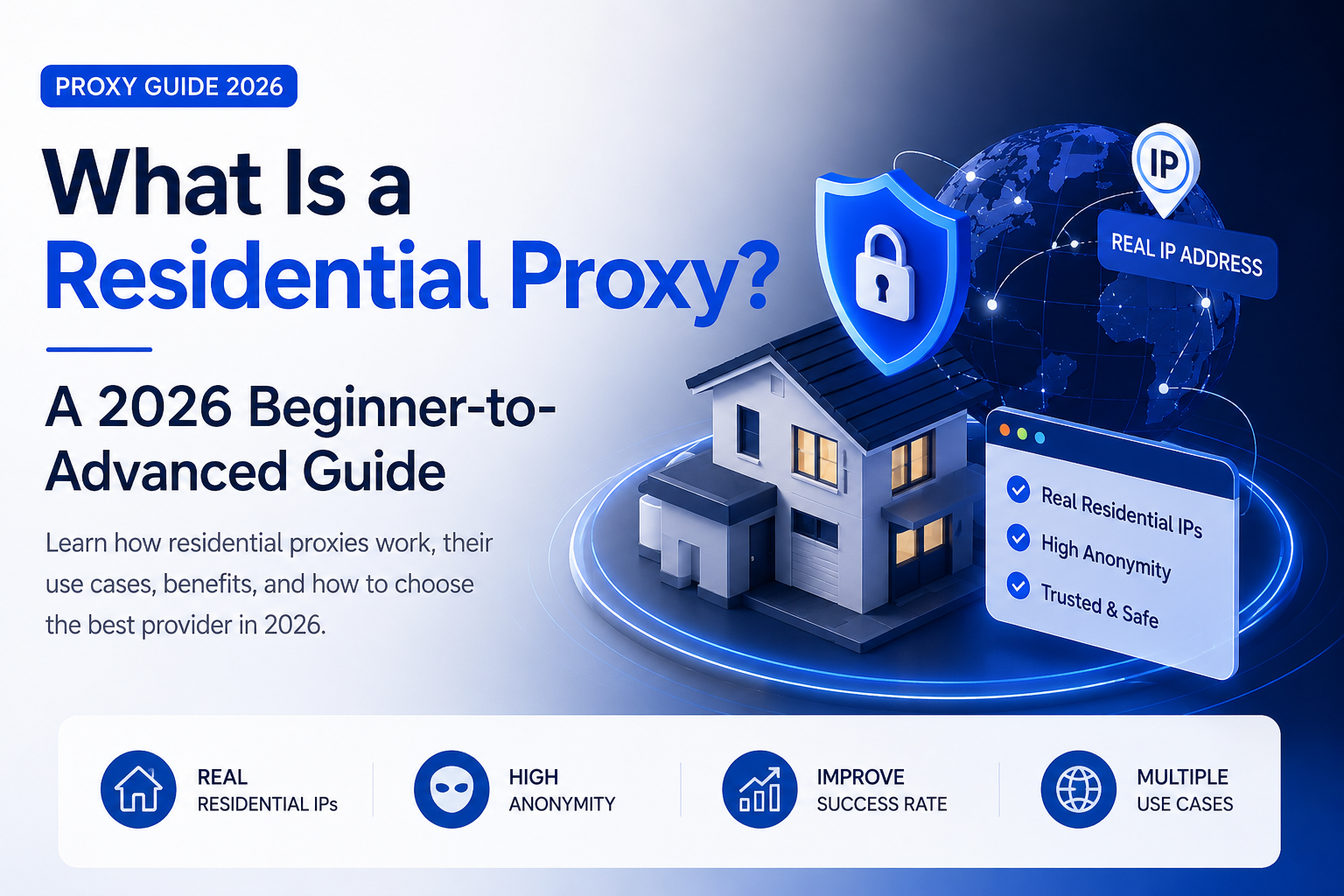
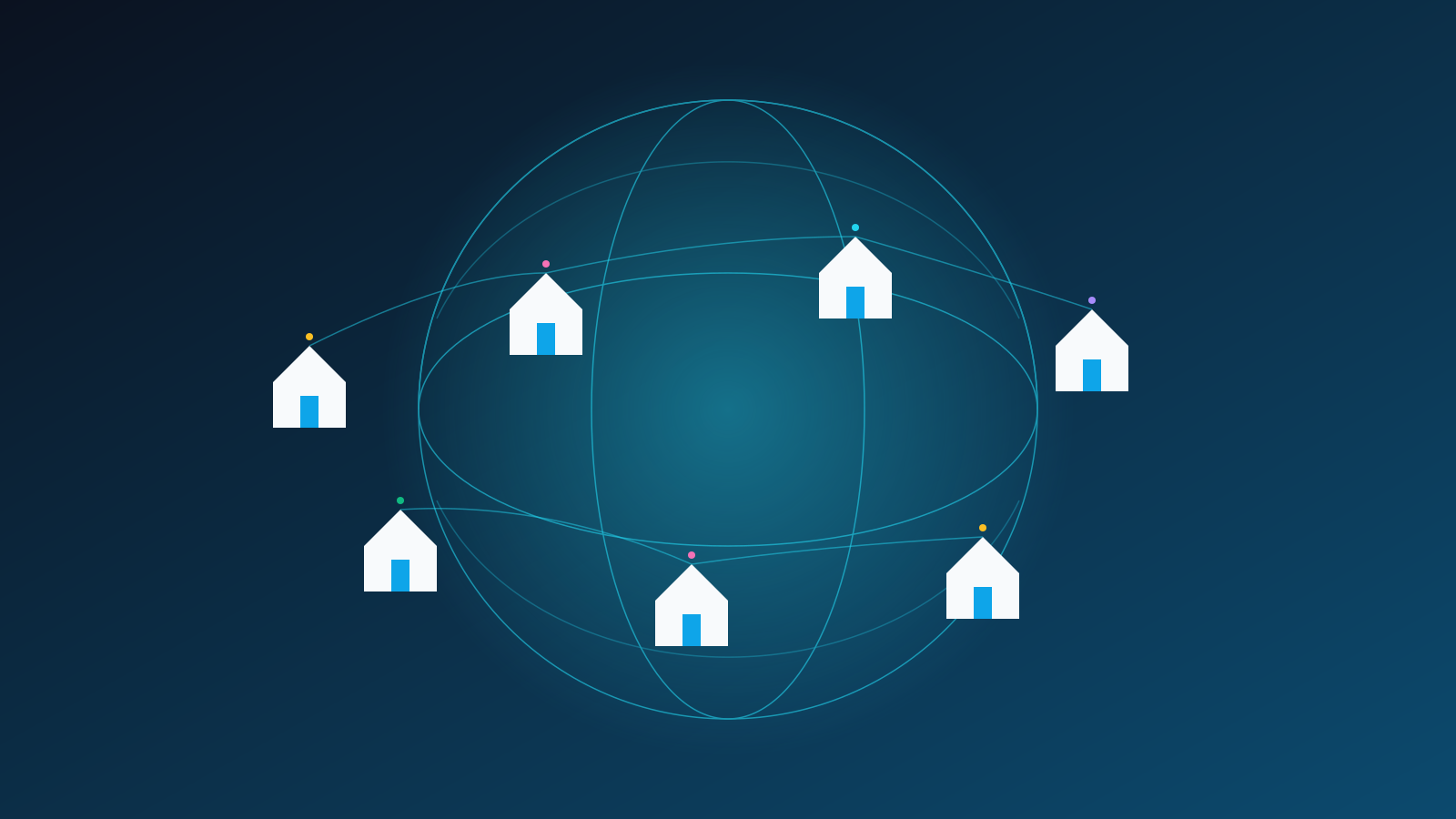
Residential proxies represent real devices—laptops, smartphones, and IoT gadgets—connected to a home Wi-Fi network. These IPs are assigned by ISPs (Comcast, AT&T, Vodafone) to genuine households.
The P2P Network Mechanism
Most residential proxy pools, such as those operated by IPRoyal or SOAX, function through a Peer-to-Peer (P2P) network. Users "opt-in" to share their bandwidth in exchange for rewards or ad-free experiences in certain apps. When you send a request, the proxy provider routes it through a specific user's home gateway. To the target server, you appear as a standard consumer browsing the web.
Rotation and Session Persistence
Because home users move around and turn off their devices, residential IPs are inherently less stable than datacenter ones. To solve this, providers use "Sticky Sessions." You can learn more about managing these in our guide on advanced proxy rotation techniques. A sticky session allows you to maintain the same residential IP for a set period (usually 1, 10, or 30 minutes) before the system automatically rotates you to a new peer.
Text alternative
graph TD
    A[Client Request] --> B{Proxy Type?}
    B -- Datacenter --> C[Cloud Server/Data Center]
    C --> D[High-Speed Backbone]
    D --> E[Target Website]
    B -- Residential --> F[Proxy Provider Gateway]
    F --> G[Real User Device / ISP]
    G --> H[Domestic Connection]
    H --> E
    E --> I[Response Returned]
Comparative Metrics: Residential vs Datacenter
| Feature | Datacenter Proxies | Residential Proxies |
|---|---|---|
| IP Source | Secondary Corporations (Cloud) | Internet Service Providers (ISP) |
| Trust Score | Low (Commonly flagged as bots) | Very High (Looks like a real person) |
| Speed | 100 Mbps - 10 Gbps | Variable (Based on peer's Wi-Fi) |
| Stability | 99.9% Uptime | Variable (Peers go offline) |
| Pricing Model | Per IP or bandwidth (Cheap) | Mostly per GB (Expensive) |
| Best For | Market research, large-scale scraping | Sneaker botting, social media, SEO |
When to Choose Datacenter Proxies
Speed and cost are the primary motivators here. If you are scraping a website with low security—one that doesn't use heavy JavaScript challenges or behavioral analysis—datacenter proxies are the most efficient choice.
Bulk Data Extraction
Performing architectural audits or scraping historical weather data requires massive bandwidth. Using residential proxies for this would be prohibitively expensive. With high-speed datacenter IPs, you can run thousands of concurrent threads without worrying about a $5,000 bill at the end of the month.
Speed-Critical Tasks
In scenarios where milliseconds matter—such as latency-based arbitrage or monitoring stock changes on sites without aggressive anti-botting—the enterprise infrastructure of a datacenter proxy is superior. For instance, vpsrated.com/proxy provides insights into how datacenter proxies can be paired with co-located VPS for near-zero latency.
When Residential Proxies are Mandatory
As cybersecurity moves toward "Zero Trust" architectures, datacenter IPs are often blocked by default. In these cases, residential IPs are the only way to access the data.
E-commerce and Sneaker Botting
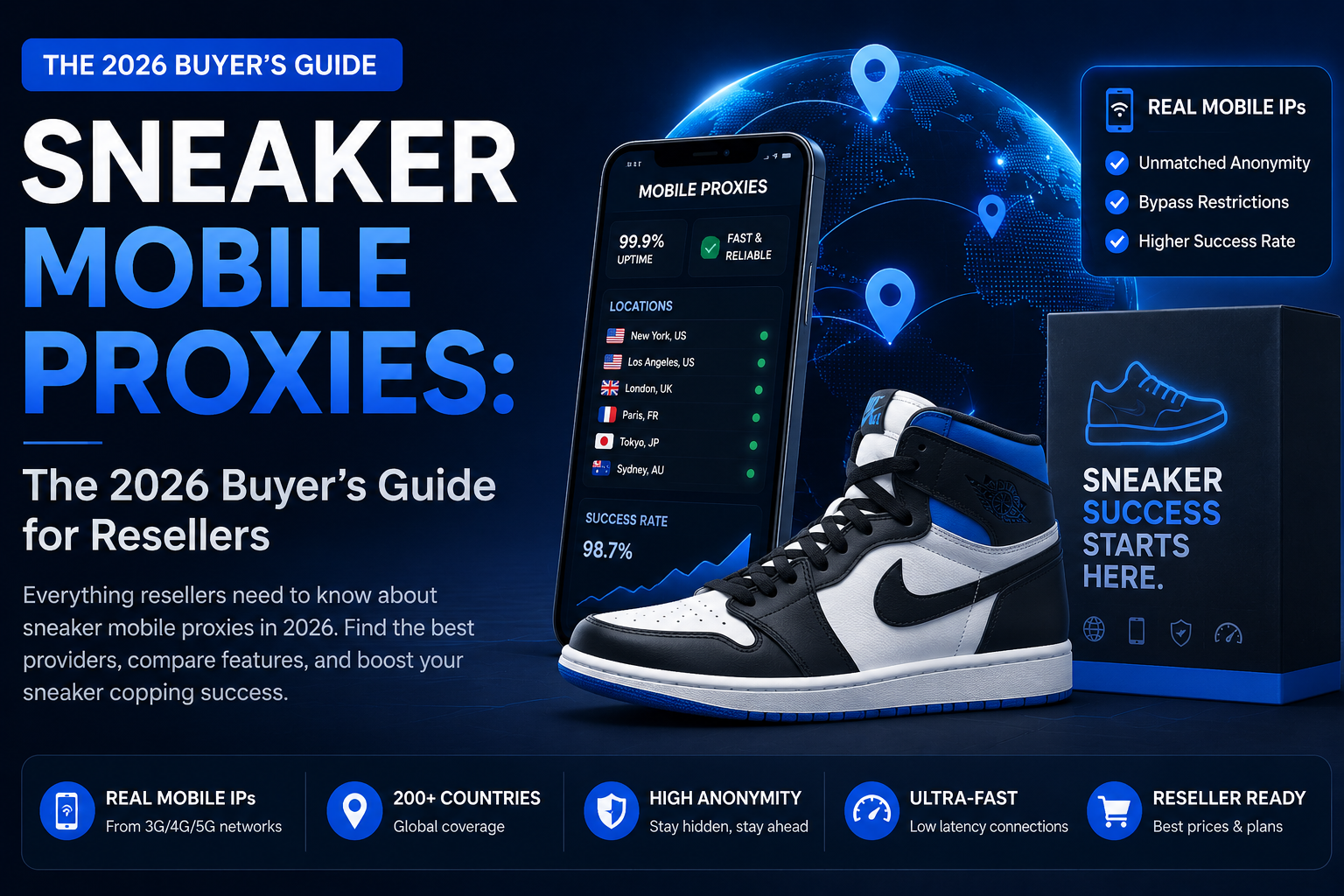
Sites like Nike, Supreme, and Shopify use advanced browser fingerprinting and IP reputation scoring. If a request comes from an AWS IP, it is immediately routed to a CAPTCHA loop or blocked. Using a 20% off all residential proxies deal is essential here to lower the cost of accessing these high-value targets.
Localized SEO and SERP Scraping
Google results change based on the user's specific city and ZIP code. Datacenter IPs are usually geolocated to the data center itself (e.g., Ashburn, VA). Residential proxies allow for city-level targeting, which is critical for verifying local SEO rankings. If you need to see what a user in Berlin sees, you must route through a German residential peer. For more on this, check out our article on geo-targeting for SEO scrapers.
Recommended Deals
If you're ready to start your project, these vetted deals offer the best entry points for both proxy types:
- 20% Off All Residential Proxies — Save on massive P2P pools for stealth scraping and social media management.
- Datacenter Proxies from $1.75/IP — High-performance, dedicated datacenter IPs for bulk data processing.
Performance Analysis: The Latency Gap
In a technical test routing 1,000 requests to a custom endpoint, datacenter proxies consistently outperformed residential IPs in terms of Round Trip Time (RTT).
- Datacenter RTT Average: 45ms
- Residential RTT Average: 280ms - 650ms
However, the "Success Rate" metric flipped when targeting LinkedIn or Amazon. The datacenter proxies faced a 78% failure rate (403 Forbidden or CAPTCHA), while residential proxies maintained a 96% success rate. This highlights that "speed" is irrelevant if you cannot bypass the front door. To optimize your success rates, you might consider rotating residential IPs to mimic organic user behavior more closely.
Code Snippet: Implementing Type-Specific Logic in Python
When building a scraper, you should design your proxy rotation logic to handle the differences between these two types. High-level libraries like requests or playwright can be configured as follows:
import requests

# Datacenter Proxy (Standard Auth)
dc_proxy = {
    "http": "http://user:pass@dc.provider.com:8080",
    "https": "http://user:pass@dc.provider.com:8080"
}

# Residential Proxy (Sticky Session via Port)
res_proxy = {
    "http": "http://user-session-12345:pass@res.provider.com:9000",
    "https": "http://user-session-12345:pass@res.provider.com:9000"
}

def fetch_data(url, proxy_type):
    proxies = dc_proxy if proxy_type == "dc" else res_proxy
    try:
        response = requests.get(url, proxies=proxies, timeout=10)
        return response.status_code
    except Exception as e:
        return str(e)

# Example usage
print(f"DC Status: {fetch_data('https://api.ipify.org', 'dc')}")
print(f"Res Status: {fetch_data('https://api.ipify.org', 'res')}")
Hybrid Strategies: The Best of Both Worlds
Senior developers rarely use just one type. A common architectural pattern is to "Waterfall" requests.
- Step 1: Attempt the request using a cheap datacenter proxy.
- Step 2: If the response is a 403 or 429, retry once with a different datacenter IP.
- Step 3: If it fails again, escalate the request to a residential proxy.
This approach minimizes the usage of expensive residential bandwidth while ensuring the data is successfully retrieved. You can find more implementation details in our post on optimizing proxy costs for developers.
The Rise of Static Residential (ISP) Proxies
There is a third, emerging category: Static Residential (ISP) proxies. These are IPs hosted in data centers but registered under a residential ISP name. They offer the speed of a datacenter proxy with the trust score of a residential one.
Providers like Bright Data and Oxylabs offer these "ISP proxies" for users who need to stay logged into an account (like an eBay or Etsy store) without the IP ever changing, which avoids triggering security alerts. They are significantly more expensive than standard residential IPs but offer the highest level of stability.
Security Considerations: Residential Proxies and Privacy
While residential proxies are great for bypassing blocks, they raise different security questions. Since your traffic is flowing through a stranger's home connection, encryption is mandatory. Always use HTTPS (TLS 1.2 or 1.3) to ensure that the "peer" in the P2P network cannot sniff your data packets. Standard providers like NordVPN or ExpressVPN (when used for their dedicated IP services) offer much higher encryption standards than a random residential proxy provider found on a forum.
Global Distribution and IP Diversity
Datacenter proxies tend to be concentrated in specific regions—mostly the US, UK, Germany, and Japan. If your project requires an IP from a remote region, such as a specific city in Brazil or Malaysia, residential proxies are usually your only option. Residential pools are vast (often 10M+ IPs), meaning you have a virtually infinite supply of "clean" addresses to rotate through.
Conversely, the pool size of a datacenter provider is fixed. If you buy a plan with 100 IPs, you only have those 100 IPs. If all 100 get banned, your project stops until you purchase a new set or wait for the provider to refresh the subnet.
Final Decision Framework
To decide which you need, ask these three questions:
- Is the target website highly protected? (If yes: Residential)
- Is my budget limited but I need a lot of data? (If yes: Datacenter)
- Do I need specific city-level targeting? (If yes: Residential)
For those managing social media accounts (Instagram, TikTok) or managing stealth accounts for Amazon, the high trust score of residential IPs is non-negotiable. For those performing large-scale SEO audits on millions of URLs, the cost savings of datacenter IPs will be the deciding factor.
FAQ
Are residential proxies legal to use?
Yes, using residential proxies is legal in most jurisdictions, provided you are not using them for illegal activities (hacking, DDoS, fraud). Most reputable providers use ethically sourced P2P networks where users are compensated for their bandwidth.
Why are residential proxies so much more expensive?
They are more expensive because the provider must maintain a massive network of individual users and pay for the "legitimacy" that comes with an ISP-backed IP. High demand and low relative supply compared to cloud IPs also drive the price up.
Can a website see if I am using a proxy?
A website can detect a datacenter proxy easily by checking the IP’s WHOIS record (which will show a cloud provider like DigitalOcean). A well-configured residential proxy is nearly impossible to detect as a proxy because it looks identical to a standard home user.
Do I need a proxy if I already have a VPN?
A VPN is great for personal privacy, but it usually provides only one IP at a time and is easily detected by websites. Proxies are designed for automation and allow you to use hundreds or thousands of IPs simultaneously, which a VPN cannot do.
Selecting the right infrastructure is the difference between a successful data operation and a wasted budget. Whether you choose the raw power of datacenter IPs or the stealth of residential pools, ensure you are using verified coupons and deals to maximize your ROI.
Get the weekly ProxyPromo brief
Fresh deals, hand-tested codes and honest reviews — every Friday. No spam.