ProxyStream Review 2026: 4G/5G Mobile Proxies From $0.60
A detailed, independent-minded review of ProxyStream: time-based pricing from $0.60, US and UK carrier targeting, rotation, protocols, VPN layer, real use cases, and where its marketing claims need a pinch of salt.
In this article
ProxyStream is a mobile proxy vendor with an unusually simple pitch: instead of buying gigabytes, you buy time. Four hours costs $0.60, a day costs $1, a week costs $5 and a month costs $16 — bandwidth included, rotation included. For anyone who has ever burned a $75 residential plan in two days of careless scraping, that pricing model alone is worth a look.
This review walks through what ProxyStream actually sells, what the numbers on its site mean, which workflows it fits, and which of its claims you should treat as marketing rather than measurement.
How to read this review. Every performance figure below (99.6% success rate, 10 Gbps, 50+ locations, unlimited bandwidth) is a claim published by ProxyStream on its own website. We have reproduced the vendor's numbers accurately, but they are not ProxyPromo measurements. Test on the shortest paid window before committing.
What ProxyStream is
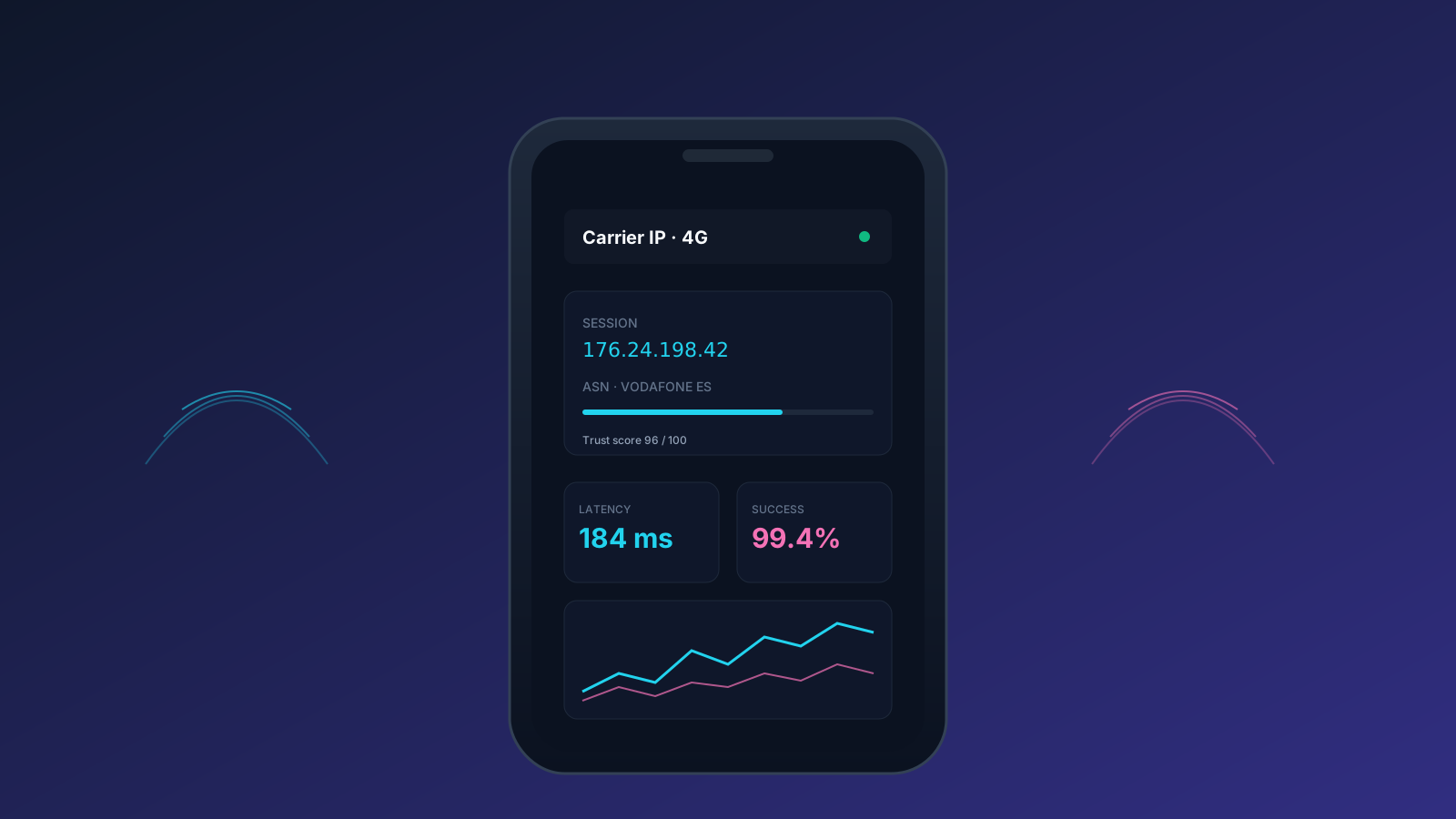
ProxyStream (proxystream.net) sells 4G and 5G mobile proxies — IP addresses that belong to mobile carrier networks rather than data centres or fixed-line ISPs. The service is aimed at:
- Multi-account management (Amazon, Instagram, TikTok and similar platforms)
- Web scraping and price monitoring
- Automation tooling
- SEO and rank monitoring
- Ad verification
- Survey panels and market research
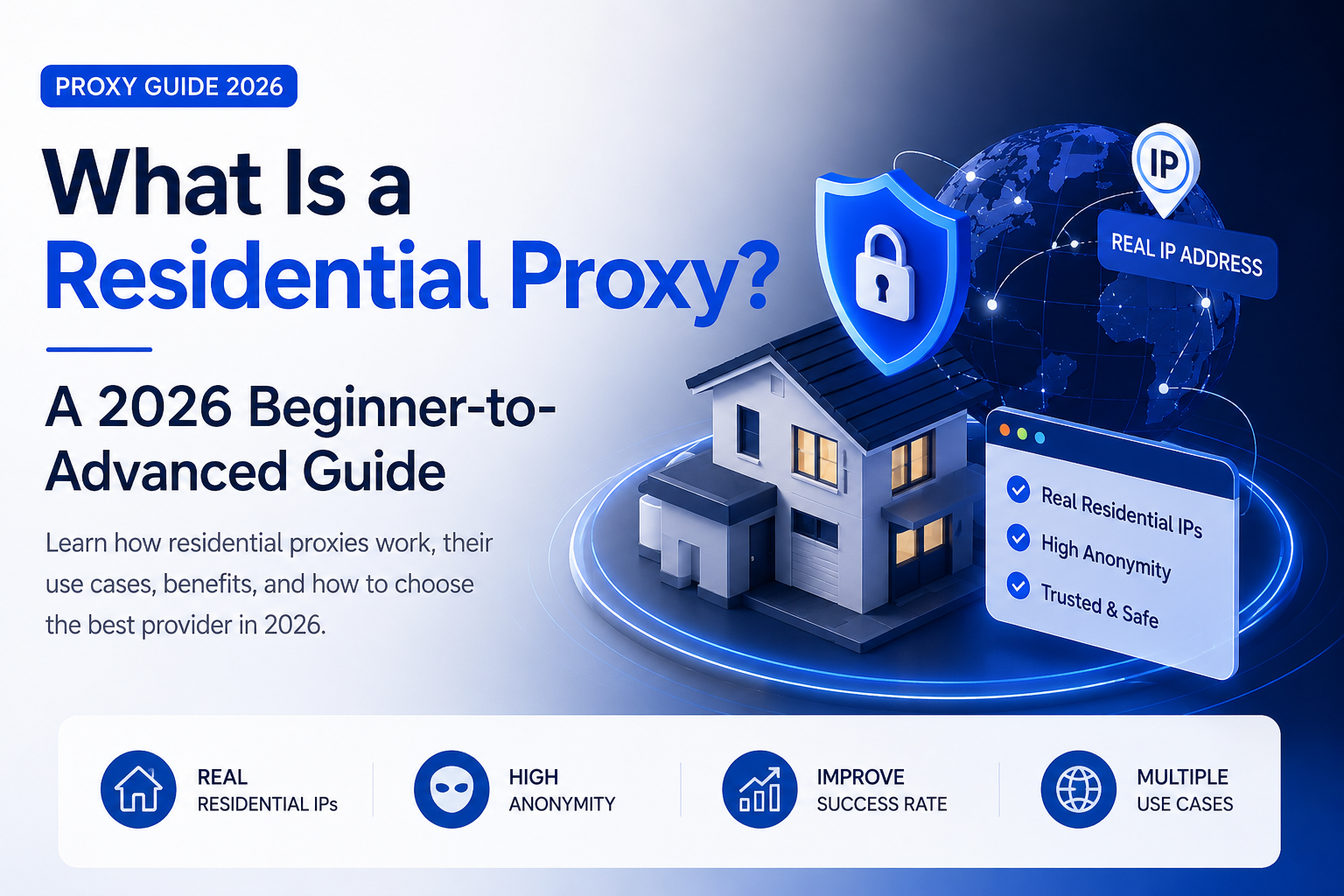
Mobile IPs matter for one structural reason: carriers put thousands of real subscribers behind the same NAT-ed address. A platform that blocks a mobile IP risks blocking a small town's worth of legitimate customers, so mobile ranges typically carry the lowest block rates of any proxy type. That is the whole value proposition — and it is why mobile proxies cost more per IP than datacenter proxies while costing less per successful request on hard targets.
Pricing: time, not gigabytes
This is ProxyStream's most distinctive feature. The live configurator prices access by duration:
| Duration | Price | Effective per day |
|---|---|---|
| 4 hours | $0.60 | — |
| 1 day | $1.00 | $1.00 |
| 3 days | $2.40 | $0.80 |
| 1 week | $5.00 | $0.71 |
| 1 month | $16.00 | $0.53 |
The example configuration shown on the site is: United States → T-Mobile → Texas (TX) → 5G → 15-minute rotation → 1 week → $5.00. Prices move with the options you pick, so treat the table as the published baseline and confirm the total in the configurator before paying.
Three consequences of time-based billing are worth spelling out:
- Heavy jobs get cheap. If your crawler pulls 40 GB in a week, per-GB residential pricing would cost a small fortune. Here it costs the same $5 as an idle week.
- Light jobs get expensive per request. If you only need 200 requests a month, metered residential bandwidth may be cheaper. Match the model to the workload.
- Budgeting becomes trivial. No overage anxiety, no mid-project top-ups, no per-GB maths in a spreadsheet.
ProxyStream advertises pay as you go with no subscription and no commitment, plus optional automatic renewal, enterprise invoicing and Net-30 terms for custom deals. Payment methods listed in its FAQ include major credit cards, PayPal and cryptocurrency (Bitcoin, Ethereum and others). The site also advertises a trial with no credit card required, instant activation, and a 30-day money-back guarantee — read the current terms at checkout, because refund conditions on mobile proxy services usually exclude consumed time.
Network, carriers and locations
ProxyStream claims 50+ locations/countries. The carriers surfaced in its interface and pages are:
| Region | Carriers listed |
|---|---|
| United States | T-Mobile, Verizon, AT&T (Sprint also appears on the homepage) |
| United Kingdom / Europe | O2, Three (EE and Vodafone appear on use-case pages) |
US 5G cities shown include New York, Los Angeles, Chicago, Miami, Dallas and Seattle. Real-time availability of a specific carrier/state/city combination is only confirmed by the configurator at purchase time — that is normal for mobile proxy vendors, because availability tracks physical SIM hardware, not a database of ranges.
Sample gateway hostnames published on the site:
proxy.verizon.ProxyStream.com:8888
proxy.tmobile.ProxyStream.com:8888
Credentials and connection details are issued in the dashboard after purchase.
Features that actually matter
Protocols. HTTP, HTTPS and SOCKS5. SOCKS5 is the one to check for: it is what you need for non-HTTP traffic, many automation frameworks and most anti-detect browsers.
Authentication. Username/password and IP whitelisting. Whitelisting is convenient on a static server; user:pass is the only sane option on a laptop with a changing home IP or inside a container fleet.
Rotation. Automatic IP rotation with a configurable interval — the site's own example uses 15 minutes. Some workflows want the opposite: a sticky IP that survives a full login-and-post session. ProxyStream references both rotating and stable usage, but the exact behaviour depends on the product, carrier and plan, so confirm the rotation semantics for your specific order.
Targeting. Country, carrier, state and (per the site's claims) city-level selection. Carrier targeting is genuinely useful for ad verification and for mimicking a specific audience segment; state targeting matters for localised pricing and SERP checks.
Bandwidth. Advertised as unlimited with no throttling, on a network the vendor describes as capable of up to 10 Gbps with lower latency than 4G on its 5G nodes. Mobile latency is always higher and jitterier than datacenter latency — plan timeouts accordingly regardless of headline capacity.
VPN layer. ProxyStream also markets an integrated VPN with OpenVPN and WireGuard support and a "double encryption" claim, usable alongside the mobile proxies. Handy if you want device-wide routing rather than per-application proxying.
Support. Live chat, priority tickets, setup assistance and troubleshooting, advertised as 24/7.
Use cases, as the vendor frames them
ProxyStream maintains dedicated pages for four workflows.
Amazon
Seller account management, multiple accounts, price monitoring, Buy Box tracking, listing scraping, geo-targeted listing checks, regional pricing and PPC ad verification. Amazon is aggressive about datacenter ranges, so mobile IPs are the pragmatic choice for repeated Buy Box polling.
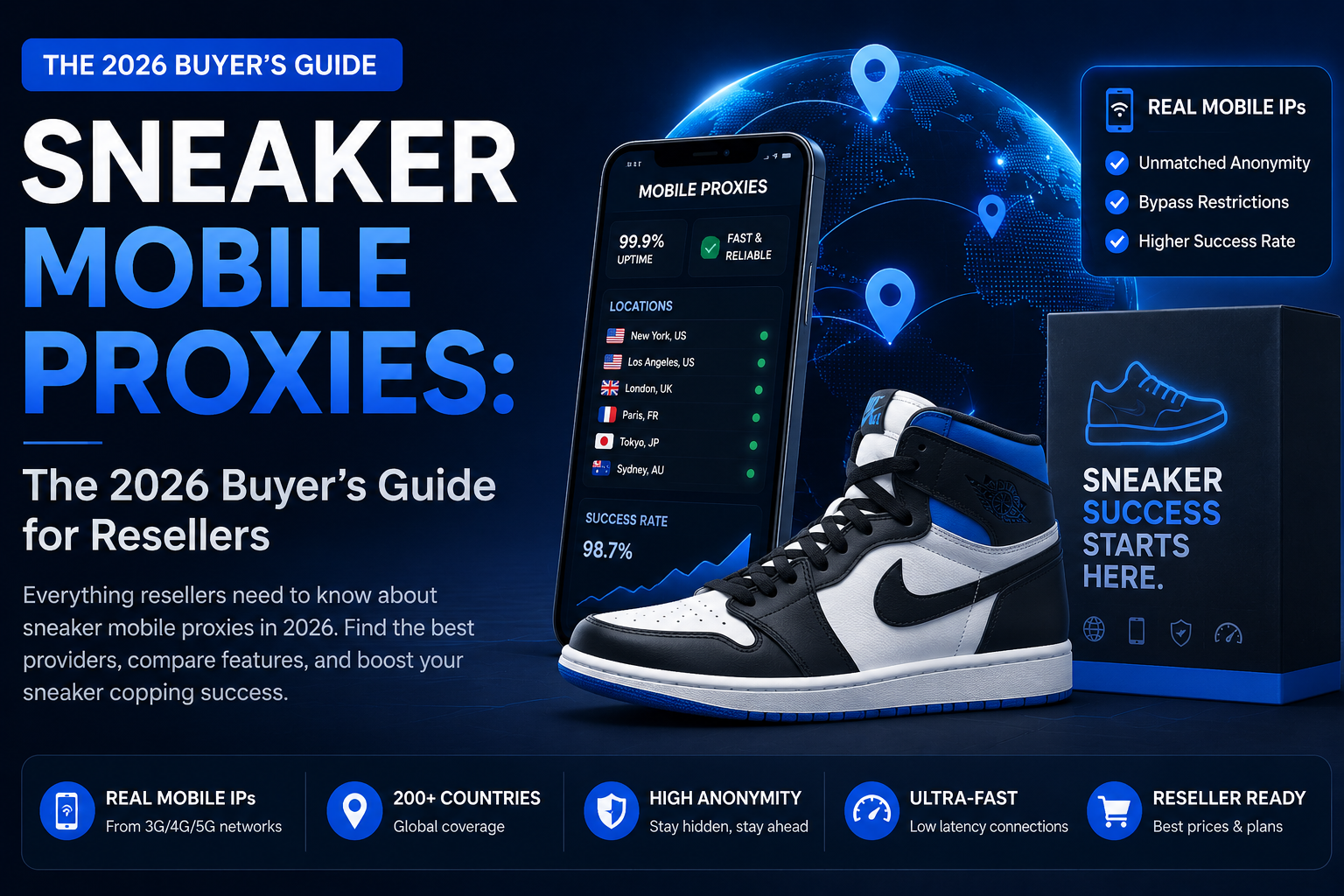
Multi-account and agency management, automation tools, account warmup, geo-targeted and influencer research, and scraping. The site compares datacenter, residential and 4G/5G mobile IPs and positions mobile as the lowest-detection option — a fair general statement about IP reputation, though behaviour, fingerprint and pacing matter at least as much as the IP. Pair proxies with a proper anti-detect browser if you are running many profiles.
TikTok
Multiple accounts, agency management, TikTok Shop, posting and scheduling tools, growth tooling, geo-targeted content checks, trend research and scraping.
Surveys and market research
Survey panels, market research, region-specific testing, research QA, panel routing and availability monitoring.
Compliance note. Creating multiple accounts or circumventing eligibility rules usually violates the terms of service of the platform involved, and ProxyStream itself puts responsibility for compliance on the user. Use mobile proxies for monitoring, QA, verification and legitimate multi-brand operations — not for evading a ban you earned.
ProxyStream vs PacketStream: read the fine print
ProxyStream publishes a comparison page against PacketStream, summarised as:
| Feature | ProxyStream's claim |
|---|---|
| Proxy type | 4G / 5G mobile |
| Billing | Time-based |
| Bandwidth | Unlimited |
| IP source | SIM-backed mobile hardware |
| Rotation | Available |
| Monthly example | $16 |
The underlying distinction is real — ProxyStream bills by time, PacketStream bills per gigabyte — but the comparison is written by ProxyStream's own team, so treat it as marketing rather than an independent benchmark. The honest version: time-based mobile wins on bandwidth-heavy jobs and on IP quality; metered peer-to-peer bandwidth wins on low-volume jobs and on raw IP diversity.
Privacy and data handling
ProxyStream's privacy policy (last updated 7 January 2026) states that it collects name, email, billing/payment information, IP address and — if you supply it for support — phone number, plus the usual automatic telemetry: IP and location, browser, operating system, device data, pages visited, links clicked, time on site and referrers. Stated uses are account management, payments, support, security, fraud prevention, analytics, and marketing if you opt in. Primary servers are in the United States and data may be transferred internationally. That is a conventional posture for a US-hosted proxy vendor; if you need EU-only data residency, ask before buying.
Pros and cons
Pros
- Time-based pricing with unlimited bandwidth — predictable and very cheap for heavy crawls
- Entry point of $0.60 makes real testing almost free
- Genuine carrier selection (T-Mobile, Verizon, AT&T, O2, Three) plus state-level targeting
- SOCKS5 alongside HTTP/HTTPS, and both auth methods
- Configurable automatic rotation
- Bundled OpenVPN/WireGuard layer
- No-card trial and an advertised 30-day money-back guarantee
Cons
- Headline numbers (99.6% success, 10 Gbps, 50+ countries) are unverified vendor claims
- Real carrier/state availability is only visible in the configurator, so planning ahead is harder
- Rotation semantics vary by product — sticky-session behaviour needs confirming
- Mobile latency is inherently higher than datacenter; not for latency-critical work
- Time-based billing is poor value for very low-volume usage
- Pool size per carrier/location is not published
Verdict
ProxyStream is a good fit if your bottleneck is bandwidth on hard targets: marketplace price and Buy Box monitoring, social platform research, ad verification across carriers, or scraping sites that block datacenter ranges outright. The $0.60 four-hour window means you can validate it against your own target list for the price of nothing, which is exactly how you should evaluate any mobile proxy vendor — including this one.
It is the wrong fit if you need a few hundred requests a month (metered residential is cheaper), if you need documented pool sizes and SLAs for an enterprise procurement process, or if your workload is latency-sensitive.
Our recommendation: buy the 4-hour window, run your actual target list, measure your own success rate and latency, and only then decide whether the $16 month is a bargain for you.
See the current ProxyStream offers on its provider page, or compare it against the rest of our mobile proxy directory.
FAQ
Is ProxyStream a mobile proxy provider or a VPN? Primarily 4G/5G mobile proxies. It additionally markets an integrated VPN with OpenVPN and WireGuard support that can be used alongside the proxies.
How much does ProxyStream cost? Published prices run from $0.60 for 4 hours to $16 for a month, with a monthly average of about $0.53 per day. The final price depends on the carrier, location, network and duration you choose in the configurator.
Does ProxyStream meter bandwidth? No. Billing is by duration and the vendor advertises unlimited bandwidth without throttling.
Which carriers can I target? T-Mobile, Verizon and AT&T in the US (Sprint also appears on the site), plus O2 and Three in the UK, with EE and Vodafone referenced on use-case pages. Confirm live availability in the configurator.
Does it support SOCKS5? Yes — HTTP, HTTPS and SOCKS5, with username/password or IP-whitelist authentication.
Is there a free trial or refund? The site advertises a trial with no credit card required, instant activation and a 30-day money-back guarantee. Check the exact terms at checkout.
Get the weekly ProxyPromo brief
Fresh deals, hand-tested codes and honest reviews — every Friday. No spam.