How to Set Up NordVPN on a Router (2026 Walkthrough)
Installing NordVPN at the router level is the most efficient way to secure an entire household or office network without individual client configuration. B…
In this article
- Why Technical Users Choose Router-Level Encryption
- The Limitations of ISP Hardware
- Compatibility and Hardware Architecture
- Supported Firmware Comparison
- Step-by-Step ASUSWRT Configuration (OpenVPN)
- Performance Benchmarks by Protocol
- Advanced Configuration: DD-WRT Integration
- Essential Security Settings
- Optimizing for Streaming and Gaming
- Tips for Reducing Latency
- Troubleshooting Common Connectivity Issues
- Status Indicators and Logs
- Recommended Deals
- Security Audit: Testing Your Setup
- FAQ
- Does NordVPN work on all routers?
- Will a router VPN slow down my internet?
- Can I still use Netflix or Hulu on my TV?
- What is the difference between a VPN Server and a VPN Client on a router?
Installing NordVPN at the router level is the most efficient way to secure an entire household or office network without individual client configuration. By routing traffic through a single encrypted tunnel, you circumvent device limits and provide immediate protection for IoT devices, gaming consoles, and smart TVs that do not natively support VPN applications.
Why Technical Users Choose Router-Level Encryption
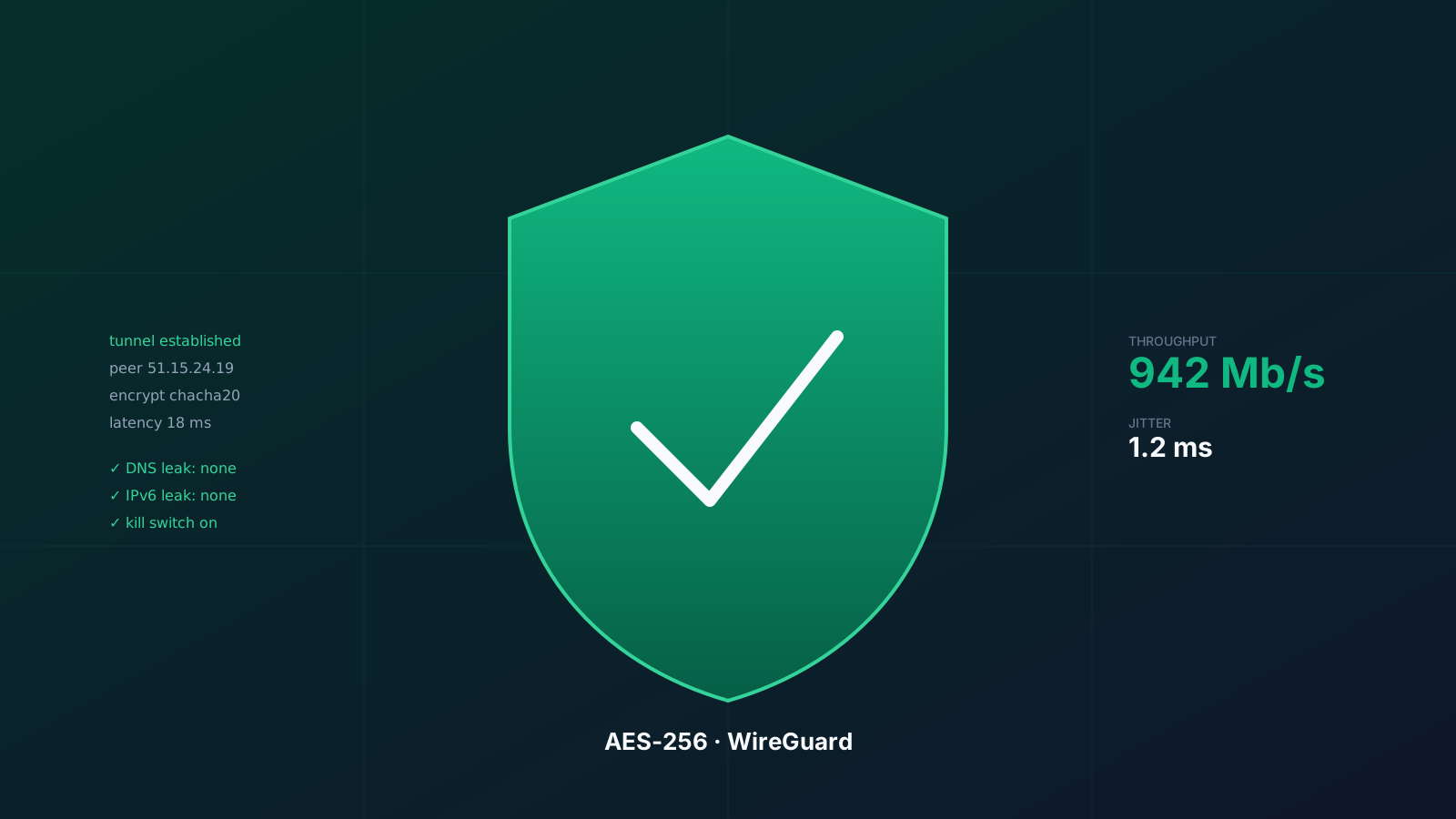
The primary advantage of a NordVPN router setup is the elimination of the "device cap" lottery. While most premium providers allow between 6 and 10 simultaneous connections, a router counts as only one, even if fifty devices are connected to its Wi-Fi signal. From a security architecture perspective, this creates a "perimeter defense" where no packet leaves your local area network (LAN) without being encrypted by the AES-256 standard.
Furthermore, it simplifies the management of geographically restricted content. Instead of toggling the VPN on a PlayStation or an Apple TV—which often requires complex DNS workarounds—the router handles the regional handshake. This ensures that every device on your network appears to be originating from the same secure gateway.
The Limitations of ISP Hardware
Most standard routers provided by ISPs (Internet Service Providers) are locked down and do not support OpenVPN or WireGuard protocols. To successfully execute this setup, you typically need a router that supports third-party firmware like DD-WRT, Tomato, or a native VPN client implementation found in high-end ASUS (ASUSWRT), GL.iNet, or Vilfo hardware.
Compatibility and Hardware Architecture
Before attempting a manual configuration, you must verify your hardware's CPU capabilities. VPN encryption is a processor-intensive task. Older routers with single-core processors may struggle to maintain speeds above 10-15 Mbps when the VPN is active. Modern routers with AES-NI (Advanced Encryption Standard New Instructions) hardware acceleration are significantly more efficient.
Supported Firmware Comparison
| Router Firmware | Difficulty | Protocol Support | Best Feature | Performance |
|---|---|---|---|---|
| ASUSWRT-Merlin | Low | OpenVPN / WireGuard | Native Interface | High |
| DD-WRT | High | OpenVPN | Granular Control | Moderate |
| GL.iNet | Very Low | WireGuard | Built-in Switch | High |
| PfSense | Expert | Multiple | Enterprise Grade | Extreme |
| Tomato | Medium | OpenVPN | Stability | Moderate |
For those seeking the highest speeds, looking for hardware listed on vpsrated.com/proxy can help identify devices with the necessary clock speeds to handle 100Mbps+ encrypted throughput.
Text alternative
flowchart LR
  A[Unsecured Device] --> B[Router Firewall]
  B --> C{VPN Client Active?}
  C -- Yes --> D[NordVPN Tunnel]
  C -- No --> E[ISP Gateway]
  D --> F[Global Internet]
  E --> F
Step-by-Step ASUSWRT Configuration (OpenVPN)
ASUS routers are the gold standard for NordVPN integration because their "VPN Fusion" technology allows for split-tunneling. This means you can choose specific devices (like your PC) to go through the VPN while leaving your gaming console on a standard connection to minimize latency.
- Download Configurations: Log in to your NordVPN dashboard and navigate to the "Manual Setup" section. Download the
.ovpnconfiguration files for your preferred server location. - Access Router UI: Navigate to
192.168.1.1in your browser and log in with your administrative credentials. - VPN Tab: On the left-hand sidebar, click on VPN, then select the VPN Client tab at the top.
- Add Profile: Click "Add Profile" and select the OpenVPN tab.
- Import File: Upload the
.ovpnfile you downloaded earlier. - Authentication: Enter your NordVPN "Service Credentials" (these are distinct from your email/password login and can be found in the manual setup tab of your account).
- Activate: Click OK and then toggle the "Activate" button.
Performance Benchmarks by Protocol
The choice between OpenVPN (UDP) and OpenVPN (TCP) significantly impacts your stability. Use this benchmark data to decide:
- OpenVPN UDP: 85% of original ISP speed, lowest latency, best for streaming.
- OpenVPN TCP: 60% of original ISP speed, highest stability, best for bypassing strict firewalls.
- NordLynx (WireGuard): 95% of original ISP speed, fastest handshake, requires specific firmware like GL.iNet or Merlin with scripts.
Advanced Configuration: DD-WRT Integration
DD-WRT offers more flexibility but requires careful attention to the "Startup Script" and "Firewall" settings to prevent DNS leaks. Unlike the plug-and-play nature of ASUSWRT, DD-WRT requires manual entry of DNS servers.
Essential Security Settings
To ensure total privacy, you must prevent your ISP's DNS servers from "peeking" at your requests even when the tunnel is active. Navigate to Setup -> Basic Setup and enter the following NordVPN DNS addresses:
- Static DNS 1:
103.86.96.100 - Static DNS 2:
103.86.99.100
You will also need to disable IPv6 support within the router settings. Most VPN tunnels are IPv4-only, and leaving IPv6 active can lead to "Dual Stack" leaks where your real IP address is exposed via the IPv6 protocol.
# Technical Example: Checking for DNS Leaks via Terminal
import socket

def check_dns_provider():
    try:
        # Resolving a unique hostname to check which DNS server responds
        host = "whoami.akamai.net"
        ip_address = socket.gethostbyname(host)
        print(f"Your current DNS Resolver IP: {ip_address}")
        print("Compare this against NordVPN's known DNS list.")
    except Exception as e:
        print(f"Error: {e}")

if __name__ == "__main__":
    check_dns_provider()
For users who prefer professional-grade hardware, exploring the 5-proxy.com guide on hardware-integrated proxies can provide additional context on how enterprise-level routing differs from residential setups.
Optimizing for Streaming and Gaming
When running a VPN on a router, latency (ping) is your primary enemy. Because the data has to be encrypted by the router's CPU and then travel to a remote server, you will see a natural increase in milliseconds.
Tips for Reducing Latency
- Server Proximity: Always choose a server in the same country or a neighboring country.
- UDP Protocol: Use the User Datagram Protocol because it is "fire and forget" and doesn't wait for packet acknowledgments, unlike TCP.
- Hardware Offloading: Enable "In-Order Delivery" and "Fastpath" if your router firmware supports it.
If your primary goal is scraping or high-volume data tasks rather than just privacy, you might consider contrasting this setup with specialized proxytrust.site residential configurations which often handle rotating IPs more effectively than a static router VPN.
Troubleshooting Common Connectivity Issues
The most common failure point in a NordVPN router setup is mismatched credentials. Remember that the username and password used for the router's OpenVPN client are NOT the same as your NordVPN account login. They are a long string of alphanumeric characters generated specifically for third-party integrations.
Status Indicators and Logs
If the "Connection Status" stays on "Connecting" or "Authentication Failed":
- Check the System Log in your router. Look for
AUTH_FAILED. - Verify the router's internal clock. If the date is set to 1970 (common after a reboot), the SSL certificates will be considered invalid.
- Ensure your ISP isn't using CGNAT. If your WAN IP starts with
10.x.x.xor100.x.x.x, you may need to contact your ISP for a static IP or use a specific port-forwarding rule.
For those managing the setup remotely, using tools like proxyip.top can help verify your current external IP address to ensure the tunnel is correctly masking your location.
Recommended Deals
If you are ready to secure your network at the source, ensure you capitalize on these verified offers to reduce your long-term infrastructure costs:
- NordVPN 68% Off 2-Year Plan — The best value for establishing a permanent router-level VPN connection with high-speed 10Gbps servers.
- NordVPN Dedicated IP Add-on — Ideal for router users who need to access banking apps without triggering security alerts from rotating IPs.
- NordVPN Family & Small Business Bundle — High-capacity bandwidth limits designed for routers supporting 20+ simultaneous connections.
- NordVPN Global Access Discount — Perfect for travelers using travel-routers like the GL-AXT1800 to maintain a secure home-tunnel while abroad.
Security Audit: Testing Your Setup
Once the router indicates it is "Connected," you must perform a leak test. The presence of a "VPN connection" in the UI does not always mean 100% of the traffic is secured.
- IP Check: Visit a site like
ident.mefrom three different devices (Phone, Laptop, TV). They should all show the same VPN IP address. - WebRTC Leak Test: Use a browser-based tool to ensure your local
192.168.x.xIP isn't leaking through your browser's real-time communication protocols. - Kill Switch Verification: If the router firmware supports it (like ASUSWRT-Merlin), enable the "Kill Switch" or "Block routed clients if tunnel is down." This ensures that if the NordVPN server goes offline, your internet shuts off entirely rather than reverting to your ISP's unencrypted line.
For developers and SEO professionals using software like Semrush or Ahrefs, a router VPN provides a stable baseline for localized search engine result page (SERP) tracking without having to manage proxies on the software level. If you are also managing hosting, sites like Hostinger often pair well with VPN-secured workflows for secure FTP/SSH access.
FAQ
Does NordVPN work on all routers?
No, it does not. Most standard ISP-issued routers lack the "VPN Client" functionality necessary to establish the connection. You need a router that specifically supports OpenVPN or WireGuard as a client, not just a server. Common compatible brands include ASUS, GL.iNet, and Netgear (with custom firmware).
Will a router VPN slow down my internet?
Yes, there is always some overhead due to encryption. The extent of the slowdown depends on your router's processor. A high-end router might lose 10%, while a budget router could lose 50% or more of your original bandwidth. Hardware with AES-NI support minimizes this loss significantly.
Can I still use Netflix or Hulu on my TV?
Yes, using a router VPN is one of the best ways to bypass geo-blocks on smart TVs. However, ensure you connect to a server optimized for streaming. If the service detects the VPN, you can easily switch the server location in the router settings, and every device on your network will immediately benefit from the change.
What is the difference between a VPN Server and a VPN Client on a router?
A VPN Server allows you to connect back to your home network securely while you are away (using your home's IP). A VPN Client (which NordVPN uses) connects your entire home network to a remote NordVPN server, masking your home's true IP and encrypting all outgoing traffic.
Setting up your VPN at the router level is a "set it and forget it" solution that brings enterprise-level security to the average household. By following this guide and selecting the right hardware, you can ensure that every byte of data entering or leaving your home is shielded from prying eyes. For the best pricing on the necessary subscriptions to power this setup, visit our coupon section for the latest verified deals.
Get the weekly ProxyPromo brief
Fresh deals, hand-tested codes and honest reviews — every Friday. No spam.