How to Set Up a Rotating Proxy in Python: Step-by-Step
Establishing a robust data gathering operation requires moving beyond static IP addresses. When scraping high-authority targets like Amazon, Google Search,…
In this article
- The Architecture of Proxy Rotation
- Backconnect Proxies vs. Manual Lists
- Residential vs. Datacenter Rotation
- Setting Up Your Python Environment
- Implementing Rotating Proxies with the Requests Library
- Basic Implementation with a Gateway
- Manual Rotation from a List (IP Pool)
- Asynchronous Proxy Rotation with Aiohttp
- Aiohttp Proxy Configuration
- Using Rotating Proxies in Playwright and Selenium
- Playwright Implementation
- Comparative Analysis of Rotation Strategies
- Handling Authentication and Session Persistence
- User:Pass Authentication
- Sticky Sessions
- Advanced Error Handling and Retries
- Best Practices for Scraping at Scale
- Recommended Deals
- Frequently Asked Questions
- How many proxies do I need for Python scraping?
- Can I rotate proxies for free in Python?
- Why am I still getting CAPTCHAs with rotating proxies?
- What is the difference between random and sticky rotation?
- Conclusion
Establishing a robust data gathering operation requires moving beyond static IP addresses. When scraping high-authority targets like Amazon, Google Search, or LinkedIn, a single IP address will inevitably trigger rate limits or CAPTCHAs. Implementing a rotating proxy in Python allows your script to cycle through thousands of unique IP addresses, mimicking the behavior of multiple organic users and significantly increasing your success rate.
This guide explores the technical architecture of proxy rotation, comparing middleware-based rotation against manual logic. We will look at practical implementations using requests, aiohttp, and Playwright, while providing configuration patterns for top-tier providers like Bright Data, Smartproxy, and Oxylabs.
The Architecture of Proxy Rotation
Before diving into code, it is essential to understand the two primary ways proxies rotate. You can either use a Self-Managed Rotation logic, where your Python code maintains a list of proxy nodes and switches them per request, or a Provider-Side Backconnect Proxy.
Backconnect Proxies vs. Manual Lists
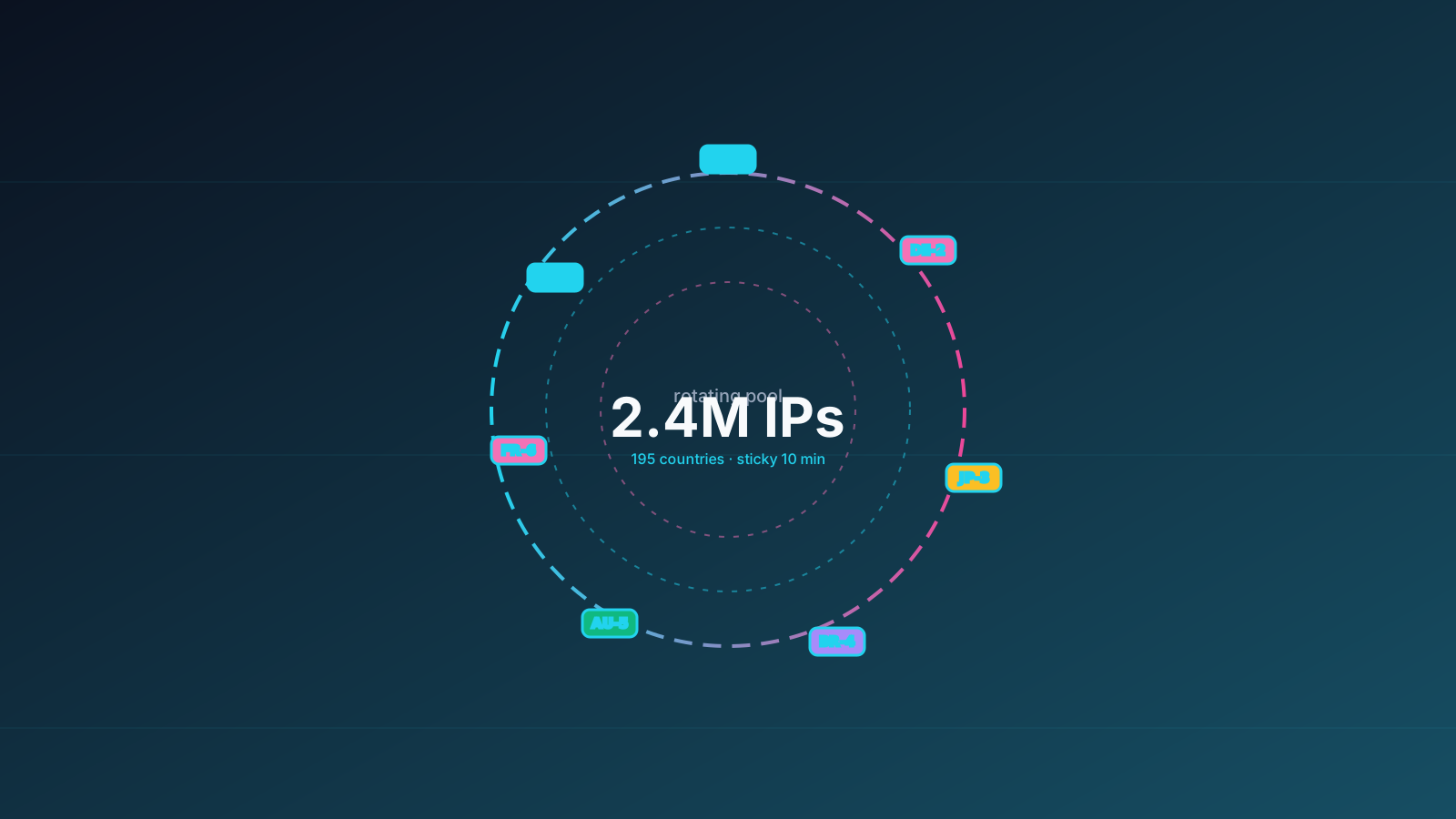
A backconnect proxy provides a single entry point (a gateway URL like p.smartproxy.com:7000). When your Python script sends a request to this gateway, the provider’s server automatically assigns a new IP from their pool to the outgoing request. This is the industry standard for scalability because it removes the overhead of managing IP health within your application logic. If you are just starting out, you can explore Smartproxy free trial options to test how backconnect gateways handle high-concurrency threads.
Residential vs. Datacenter Rotation
Datacenter proxies offer high speeds but are easily detected by advanced anti-bot systems like Cloudflare or Akamai. Residential proxies, sourced from real ISP connections, are much harder to block but come at a higher cost. For heavy-duty scraping, leveraging a 25% discount on residential proxies can significantly lower your operational expenses while maintaining high anonymity.
Text alternative
graph TD
    A[Python Script] --> B{Rotation Method}
    B --> C[Manual List Rotation]
    B --> D[Backconnect Gateway]
    C --> E[IP List A, B, C...]
    D --> F[Provider's Load Balancer]
    E --> G[Target Website]
    F --> G
    G --> H[Success/Block Response]
    H -- If Success --> I[Continue]
    H -- If Block --> J[Switch IP/Retry]
Setting Up Your Python Environment
To follow this tutorial, you need a modern Python environment (3.8+). We will use the requests library for synchronous tasks and aiohttp for asynchronous scraping. Additionally, we will use python-dotenv to keep your proxy credentials secure.
Install the necessary dependencies:
pip install requests aiohttp python-dotenvCreate a .env file to store your credentials from proxytrust.site:
PROXY_USER=your_username
PROXY_PASS=your_password
PROXY_GATEWAY=gate.smartproxy.com:7000
Implementing Rotating Proxies with the Requests Library
The requests library is the most common tool for HTTP operations in Python. To implement rotation, we define a proxy dictionary that includes the authentication details.
Basic Implementation with a Gateway
When using a provider like Bright Data or Smartproxy, the rotation happens at the server level. Your code remains simple:
import requests

proxies = {
    "http": "http://user:pass@gate.provider.com:7000",
    "https": "http://user:pass@gate.provider.com:7000",
}

def fetch_url(url):
    try:
        response = requests.get(url, proxies=proxies, timeout=10)
        print(f"IP Used: {response.json().get('origin')}")
        return response.text
    except Exception as e:
        print(f"Request failed: {e}")

fetch_url("https://httpbin.org/ip")
Manual Rotation from a List (IP Pool)
If you are using a list of static proxies from proxyip.top, you can use the itertools.cycle function to loop through them.
import requests
from itertools import cycle

proxy_list = [
    "http://proxy1.com:8000",
    "http://proxy2.com:8000",
    "http://proxy3.com:8000"
]

proxy_pool = cycle(proxy_list)

def rotating_fetch(url):
    proxy = next(proxy_pool)
    try:
        res = requests.get(url, proxies={"http": proxy, "https": proxy}, timeout=5)
        return res.status_code
    except:
        print("Proxy failed, skipping...")

for _ in range(10):
    rotating_fetch("https://vpsrated.com/proxy")
Building a manual rotation system requires additional logic for handling proxy failures in Python to ensure your scraper doesn't hang when a specific node goes down.
Asynchronous Proxy Rotation with Aiohttp
For high-performance scrapers that process thousands of URLs per minute, synchronous requests is too slow. aiohttp allows for non-blocking I/O, which is essential when waiting for proxy responses.
Aiohttp Proxy Configuration
Unlike requests, aiohttp requires the proxy URL to be passed as a string directly into the request method.
import asyncio
import aiohttp

async def fetch(session, url, proxy):
    try:
        async with session.get(url, proxy=proxy, timeout=10) as response:
            data = await response.json()
            print(f"Response from IP: {data['origin']}")
    except Exception as e:
        print(f"Error: {e}")

async def main():
    proxy_url = "http://user:pass@gate.smartproxy.com:7000"
    urls = ["https://httpbin.org/ip"] * 5

    async with aiohttp.ClientSession() as session:
        tasks = [fetch(session, url, proxy_url) for url in urls]
        await asyncio.gather(*tasks)

if __name__ == "__main__":
    asyncio.run(main())
When using aiohttp, ensure you are aware of the overhead of creating new sessions. For large-scale projects, rotating the proxy within a single ClientSession while varying headers is the most efficient path. Check out our guide on optimizing aiohttp scraper performance for more advanced tuning.
Using Rotating Proxies in Playwright and Selenium
Modern web applications use heavy JavaScript (React, Vue), making simple HTTP requests insufficient. You need browser automation tools like Playwright or Selenium, both of which support proxy rotation.
Playwright Implementation
Playwright is generally superior to Selenium for scraping due to its native support for the Chrome DevTools Protocol.
from playwright.sync_api import sync_playwright

def run():
    with sync_playwright() as p:
        # Configuration for rotating proxy
        browser = p.chromium.launch(proxy={
            "server": "http://gate.smartproxy.com:7000",
            "username": "your_user",
            "password": "your_password"
        })
        page = browser.new_page()
        page.goto("https://httpbin.org/ip")
        print(page.content())
        browser.close()

run()
When using Playwright, developers often encounter challenges with persistent contexts. Setting up a playwright proxy rotation strategy is vital if you need to maintain session cookies across multiple requests while still changing the IP address.
Comparative Analysis of Rotation Strategies
The following table summarizes the performance and ease of use for different Python-based proxy rotation methods.
| Method | Library | Ideal Use Case | Difficulty | Reliability |
|---|---|---|---|---|
| Backconnect Gateway | Requests / Aiohttp | Enterprise-level scraping | Low | Very High |
| Random List Selection | Requests | Small utility scripts | Medium | Low |
| Custom Middleware | Scrapy | Complex, nested crawling | High | Medium |
| Browser Contexts | Playwright / Selenium | SPA & JS-heavy sites | Medium | High |
For those looking for premium infrastructure, testing environments from 5-proxy.com can provide the low-latency backbone required for these comparisons.
Handling Authentication and Session Persistence
Most residential proxy providers use one of two authentication methods: IP Whitelisting or User:Pass Authentication.
User:Pass Authentication
This is the most flexible method. As shown in the snippets above, the credentials are embedded in the proxy URL. However, special characters in passwords (like @ or :) must be URL-encoded using urllib.parse.quote().
Sticky Sessions
In some cases, you need to maintain the same IP address for multiple steps (e.g., logging in and then scraping a profile). Most providers allow "Sticky Sessions" by adding a session ID to the username string: user-res-session-12345:pass. In Python, you can generate a random string for each new "user session" to ensure all subsequent requests for that task use the same proxy node.
import random
import string

def generate_session_id():
    return ''.join(random.choices(string.ascii_lowercase + string.digits, k=8))

session_id = generate_session_id()
sticky_proxy = f"http://user-session-{session_id}:pass@gate.provider.com:7000"
Providers like proxyip.top offer detailed documentation on how long their sticky sessions last, which usually ranges from 1 to 30 minutes.
Advanced Error Handling and Retries
A professional scraper must account for the fact that even the best proxies fail. You should implement a retry mechanism with exponential backoff. Using the tenacity library is a clean way to handle this in Python.
from tenacity import retry, stop_after_attempt, wait_exponential

@retry(stop=stop_after_attempt(5), wait=wait_exponential(multiplier=1, min=4, max=10))
def resilient_request(url):
    response = requests.get(url, proxies=proxies, timeout=5)
    response.raise_for_status()
    return response.text
This ensures that if a proxy node is temporarily down or a request is throttled, the script doesn't crash but instead waits and tries a different node.
Best Practices for Scraping at Scale
To avoid getting banned even with rotating proxies, follow these operational guidelines:
- User-Agent Rotation: Pair your rotating proxies with a pool of realistic User-Agent strings. Using a mobile User-Agent on a datacenter IP is a red flag.
- Header Consistency: Ensure your headers match the order and content of a real browser. Libraries like
fake-useragentcan help. - Respect Robots.txt: While not always feasible, checking the
robots.txtof a site like proxytrust.site helps you understand the target's crawl delay requirements. - Monitor Success Rates: Track your HTTP 403 and 429 error codes. If they spike, your rotation logic or proxy quality may be the issue.
Recommended Deals
If you are ready to implement these Python scripts, take advantage of these exclusive discounts to reduce your overhead:
- 25% Off Residential Proxies — Save big on high-anonymity residential traffic for scraping.
- Smartproxy Free Trial — Test their backconnect gateway infrastructure with a risk-free trial.
Frequently Asked Questions
How many proxies do I need for Python scraping?
The number of proxies depends on the target website's sensitivity. For sites like Amazon, a pool of at least 1,000 to 5,000 residential IPs is recommended. Using a backconnect service from a provider like Smartproxy gives you access to millions of IPs through a single revolving endpoint.
Can I rotate proxies for free in Python?
You can scrape free proxy lists from various websites, but these are highly unreliable, slow, and often compromise your data security. For any professional or commercial application, using a paid service from a source like 5-proxy.com is necessary to ensure uptime and speed.
Why am I still getting CAPTCHAs with rotating proxies?
Rotating IPs is only one part of the puzzle. Websites also track Browser Fingerprinting (Canvas, WebGL), TLS fingerprints, and behavior patterns. If you are still blocked, consider using a managed "Scraping Browser" or a tool like Playwright with the stealth plugin.
What is the difference between random and sticky rotation?
Random rotation gives you a brand new IP for every single request, which is great for mass data extraction. Sticky rotation keeps you on the same IP for a set duration (e.g., 10 minutes), which is required for tasks that involve logging into an account or maintaining a shopping cart.
Conclusion
Implementing a rotating proxy in Python is a foundational skill for modern developers. Whether you choose the simplicity of a backconnect gateway or the control of a manual rotation script, the key is to match your proxy type to your target's defense mechanisms. For the best results, always prioritize residential IPs for social media and e-commerce targets and use asynchronous libraries like aiohttp to maximize your throughput.
Ready to start? Browse our full list of proxy and VPN coupons to get the best prices on the tools mentioned in this guide.
Get the weekly ProxyPromo brief
Fresh deals, hand-tested codes and honest reviews — every Friday. No spam.