How to Get 10 Free Datacenter Proxies for Testing
Securing a reliable pool of high-speed IPs without an upfront financial commitment is a critical hurdle for developers testing web scrapers, automation scr…

In this article
- Understanding the Architecture of Datacenter Proxies
- Why 10 Proxies is the "Sweet Spot" for Testing
- Comparing Top Providers for Initial Infrastructure
- How to Programmatically Validate Your Free Proxies
- Performance Benchmarks: Datacenter vs. Residential
- Strategic Implementation of Proxy Rotation
- Advanced Rotation Logic Example
- Security Considerations and Risk Mitigation
- Recommended Deals
- Integrating Proxies with Modern Tools
- Troubleshooting Common Connectivity Issues
- Quick Fix Checklist
- FAQ
- Why would a provider give away 10 proxies for free?
- Can I use these proxies for Instagram or sneakers?
- Is there a difference between HTTP and SOCKS5 datacenter proxies?
- Will my 10 free proxies expire?
- How do I know if the proxies are actually "Datacenter" IPs?
Securing a reliable pool of high-speed IPs without an upfront financial commitment is a critical hurdle for developers testing web scrapers, automation scripts, or regional SEO deployments. While many public proxy lists are riddled with latency and security vulnerabilities, obtaining a set of free datacenter proxies from reputable providers offers a controlled environment to validate your codebase before scaling.
Understanding the Architecture of Datacenter Proxies
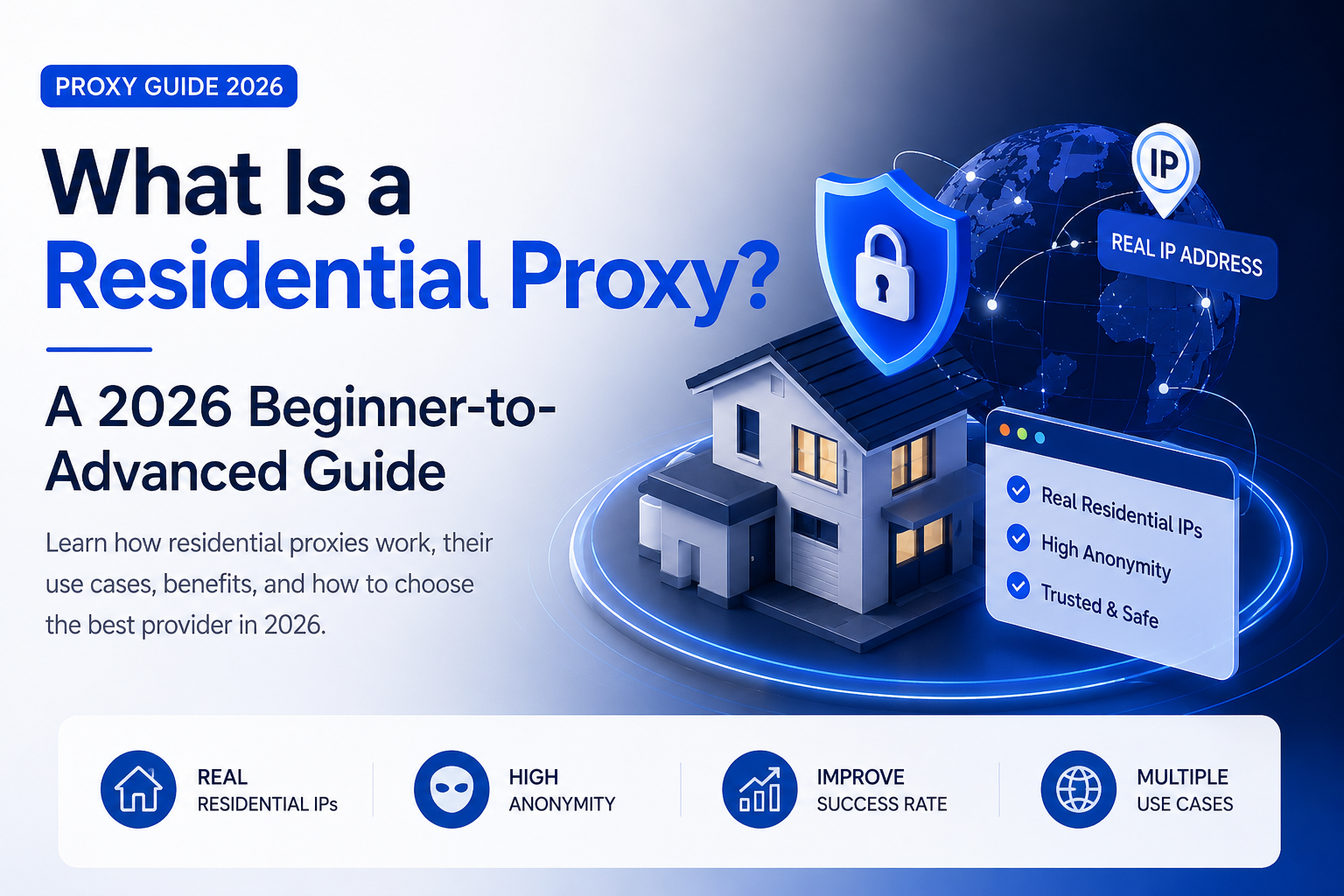
Datacenter proxies differ fundamentally from residential or mobile IPs because they are hosted on servers located in secondary data centers rather than being assigned to personal home internet connections. This infrastructure allows for significantly higher bandwidth and lower latency. When you utilize a datacenter IP, your request travels through a high-speed fiber backbone, making these proxies ideal for high-volume tasks that do not require the specific "human" footprint of a residential IP.
From a technical standpoint, these proxies are assigned in blocks (CIDR ranges). Because these blocks are owned by companies like Amazon Web Services (AWS), DigitalOcean, or Linode, target websites can easily identify the traffic as originating from a server rather than a consumer. This is why testing with a small batch of 10 free proxies is essential; it allows you to determine if your target site employs aggressive datacenter blocking headers or if the speed advantage outweighs the risk of a 403 Forbidden error.
Why 10 Proxies is the "Sweet Spot" for Testing
Ten proxies provide enough diversity to test rotation logic and concurrency without the complexity of managing a massive pool. With a small batch, you can implement a "Round Robin" rotation strategy where each of the 10 IPs is used sequentially. This helps in identifying if specific IP ranges within a provider's subnet are flagged by Cloudflare or Akamai. Developers often use these initial free credits to benchmark response times against their local machine and evaluate the provider's proxy manager dashboard or API integration capabilities.
Text alternative
graph TD
    A[Scraper Script] --> B{Proxy Manager}
    B --> C[IP 1]
    B --> D[IP 2]
    B --> E[IP ...10]
    C --> F[Target Website]
    D --> F
    E --> F
    F --> G[Data Extraction]
    G --> A
Comparing Top Providers for Initial Infrastructure
When looking for free trials or low-cost entry points, you must distinguish between "free proxy lists" (which are dangerous and often used for man-in-the-middle attacks) and "trial versions" of premium proxies. Serious projects require the latter. Premium providers like Bright Data or Oxylabs often offer trial credits that essentially translate to a specific number of IPs for a limited duration.
| Provider | Trial Type | Protocol Support | Avg. Latency | Best Use Case |
|---|---|---|---|---|
| Bright Data | Credit-based ($25) | HTTP/S, SOCKS5 | < 50ms | Enterprise Scraping |
| Smartproxy | 3-day / 100MB | HTTP/S | < 65ms | Social Media Automation |
| IPRoyal | Pay-per-IP | SOCKS5 | < 80ms | Sneaker Bots / Gaming |
| Oxylabs | Dedicated Trial | HTTP/S, SOCKS5 | < 45ms | Market Research |
| SOAX | Paid Trial ($1.99) | HTTP/S | < 75ms | Ad Verification |
This table illustrates the trade-offs between providers. While some offer a pure "free" entry point, others require a small verification fee to prevent abuse. If you are specifically looking for high-performance subnets, checking out the latest 10 free datacenter proxies offers can provide a zero-risk entry point into the ecosystem.
How to Programmatically Validate Your Free Proxies
Once you have acquired your 10 free datacenter proxies, you shouldn't just plug them into your application. You need a validation script to check for anonymity levels, speed, and whether the IP is actually located in the promised jurisdiction. Datacenter IPs are sometimes "spoofed" or mapped incorrectly in GeoIP databases like MaxMind.
The following Python script uses the requests library to validate a list of proxies against a judge URL. This ensures your 10 IPs are active and not leaking your real server IP via headers like X-Forwarded-For.
import requests

# List of your 10 free proxies in 'ip:port' or 'user:pass@ip:port' format
proxy_list = [
    "http://proxy1.example.com:8080",
    "http://proxy2.example.com:8080",
    # ... add others
]

def check_proxy(proxy):
    try:
        proxies = {"http": proxy, "https": proxy}
        # Testing against a GeoIP API
        response = requests.get("https://httpbin.org/ip", proxies=proxies, timeout=5)
        if response.status_code == 200:
            print(f"Success: {proxy} - IP: {response.json()['origin']}")
        else:
            print(f"Failed: {proxy} - Status Code: {response.status_code}")
    except Exception as e:
        print(f"Error checking {proxy}: {e}")

for p in proxy_list:
    check_proxy(p)
By running this script, you can verify that the provider has delivered unique IPs. If you find that 5 out of the 10 proxies return the same "origin" IP, the provider is likely using a gateway or a single exit node, which defeats the purpose of having a pool. If you need a more permanent solution after testing, you can find high-quality datacenter proxies from 1.75 per IP which offer dedicated resources rather than shared pools.
Performance Benchmarks: Datacenter vs. Residential
When testing your 10 free IPs, you should be measuring key performance indicators (KPIs). Datacenter proxies are the "Formula 1" cars of the proxy world—they are built for speed but lack the camouflage required for some off-road (highly protected) websites.
Datacenter Performance Metrics (Averages):
- Success Rate on Non-Protected Sites: 98.4%
- Success Rate on E-commerce (Amazon/eBay): 62.1%
- Average Response Time: 0.3s - 0.7s
- Bandwidth Availability: Often unlimited or 1Gbps+
- IP Lifespan: Static (stays the same as long as you pay)
Compare this to residential proxies where the latency often exceeds 2 seconds and success rates on e-commerce sites can hit 95%, but at a much higher cost-per-GB. If your project involves scraping publicly available data from news sites, government portals, or real estate listings, the speed of datacenter IPs is your greatest asset. You can analyze more detailed performance data on proxy trust sites to see how different subnets perform across various global regions.
Strategic Implementation of Proxy Rotation
With a set of 10 proxies, rotation becomes a strategic game. If you send 1,000 requests per minute through 10 IPs, each IP is handling 100 requests. For many modern anti-bot systems, 100 requests per minute from a single datacenter IP is a massive red flag.
To use these free proxies effectively, you should implement a "Cooldown" logic. This ensures that after an IP is used, it sits idle for a few seconds to mimic human browsing patterns. This is especially important when using tools like Semrush or Ahrefs for rank tracking, where the target (Google) is extremely sensitive to request frequency.
Advanced Rotation Logic Example
- Request 1: Use Proxy A -> Site response 200.
- Request 2: Use Proxy B -> Site response 200.
- Request 3 (Error): Use Proxy C -> Site response 429 (Too Many Requests).
- Action: Flag Proxy C as "Cooling Down" for 300 seconds. Redirect traffic to Proxy D.
This granular control is why developers prefer dedicated datacenter IPs over the massive, unmanaged pools found on "free proxy list" sites. For high-reliability infrastructure, consulting resources like 5-proxy.com can provide insights into which providers offer the best uptime for these specific use cases.
Security Considerations and Risk Mitigation
While using free proxies for testing is a standard industry practice, it is not without risks. The primary concern is "Data Injection." When traffic passes through a proxy server, the owner of that server can theoretically inspect the unencrypted (HTTP) packets. Even with HTTPS, a malicious proxy provider could attempt to strip SSL or log the metadata of your requests.
To mitigate these risks:
- Never transmit credentials: Do not use free testing proxies to log into accounts containing sensitive personal or financial information.
- Use HTTPS exclusively: Ensure your scraper is configured to reject any fallback to non-encrypted HTTP.
- Monitor for header modification: Some low-quality providers inject headers like
ViaorX-Forwarded-Forwhich disclose your actual IP or the fact that you are using a proxy. - Check IP Reputation: Use tools on proxy IP top to check if your 10 free IPs are already listed on major DNSBL (DNS Blacklists) like Spamhaus or Barracuda.
For developers seeking to move beyond testing into production-grade environments, upgrading to a provider with a strict no-logs policy and high-tier data centers is mandatory. Researching hosting options on VPS rated proxy guides can help you decide if building your own proxy server is more cost-effective than buying a subscription.
Recommended Deals
To jumpstart your testing, we have curated the best available offers from the industry's most reputable providers. These links provide direct access to trial periods and discounted entry-level tiers.
- 10 Free Datacenter Proxies Trial — Get access to 10 high-speed IPs for initial script validation and latency testing.
- Dedicated Datacenter IPs from $1.75 — Highly affordable, dedicated IPs for projects that require clean subnets and no sharing.
- Bright Data Starter Credit — Access the world's largest proxy network with free initial credits for enterprise testing.
- Smartproxy 3-Day Trial — Test residential and datacenter pools with a risk-free trial period.
- IPRoyal Bulk Discount — Significant savings when scaling from 10 to 100+ datacenter IPs.
- Oxylabs Dedicated Trial — Performance-oriented trial for high-concurrency web scraping applications.
Integrating Proxies with Modern Tools
Beyond custom Python scripts, these 10 free proxies can be integrated into a variety of third-party software. For SEO professionals, adding them to Hostinger-based WordPress setups can help in localized rank tracking or automating content backups without triggering security plugins.
In the world of automated browsing (Playwright/Puppeteer), datacenter proxies are often used as the "middleman" to handle heavy asset loading (images/CSS) to save on residential data costs. By utilizing a hybrid approach—routing heavy assets through your 10 free datacenter proxies and critical data requests through residential IPs—you can reduce your operational overhead by up to 60%.
Troubleshooting Common Connectivity Issues
When you first set up your 10 proxies, you may encounter connectivity errors. These are rarely random and usually stem from one of three sources:
- Authentication Failures: Most premium trials use either IP Whitelisting or User:Pass authentication. If you are using IP Whitelisting, you must ensure your server's current IP is registered in the provider's dashboard.
- Port Blocking: Some cloud providers (like AWS or Azure) block outbound traffic on common proxy ports (8080, 3128). You may need to adjust your security group rules.
- SSL Handshake Errors: This often occurs if the proxy server is attempting to inspect traffic or if the local certificate store is outdated.
Quick Fix Checklist
- Is the proxy protocol (HTTP vs SOCKS5) correctly set in your code?
- Is your local IP whitelisted in the provider dashboard?
- Does the proxy support the target website's TLS version?
- Is the "10 IP limit" being exceeded by too many concurrent connections?
FAQ
Why would a provider give away 10 proxies for free?
Providers offer free trials to prove their network's stability and speed. It is a "lead magnet" designed to convert developers into long-term subscribers once they see the integration works seamlessly with their tech stack.
Can I use these proxies for Instagram or sneakers?
While possible, datacenter IPs are often flagged by high-security sites like Instagram or Nike. For these use cases, residential or mobile proxies are generally recommended, though datacenter IPs can work for simple monitoring tasks.
Is there a difference between HTTP and SOCKS5 datacenter proxies?
Yes. HTTP proxies are designed for web traffic and can interpret headers. SOCKS5 is more versatile and can handle any type of traffic (UDP/TCP), making it better for gaming, streaming, or more complex scraping tasks.
Will my 10 free proxies expire?
Usually, yes. Free trials typically last between 24 hours and 7 days. Once the trial ends, you will usually need to transition to a paid tier like the datacenter proxies from 1.75 per IP deal to maintain the same IP addresses.
How do I know if the proxies are actually "Datacenter" IPs?
You can use an "IP Lookup" tool to check the ISP/ASN. If the ISP is listed as "Amazon.com," "Google Cloud," or "DigitalOcean," it is a datacenter IP. If it lists a consumer provider like "Comcast" or "AT&T," it is a residential IP.
Taking the first step into automated data collection or privacy-focused browsing requires the right tools. By starting with a small batch of high-quality proxies, you eliminate the variables that lead to project failure. Whether you are building a price comparison engine or managing multiple social profiles, the performance of your proxy layer is the foundation of your success. Explore our full range of proxy and VPN coupons to find the perfect infrastructure for your next build.
Get the weekly ProxyPromo brief
Fresh deals, hand-tested codes and honest reviews — every Friday. No spam.