How to Bypass Rate Limits With Proxy Rotation
Effective web scraping and automated data collection rely on the ability to remain undetected by anti-bot measures, the most common of which is rate limiti…
In this article
- Understanding the Mechanics of Rate Limiting
- The Architecture of Proxy Rotation
- Residential vs. Datacenter Proxies for Rate Limit Evasion
- Advanced Implementation: Python and Rotating Proxies
- Evaluating Provider Pool Sizes and Performance
- Performance Benchmarks: Success Rates by Provider
- Managing Headers and Footprints
- Cost-Benefit Analysis of Rotation Strategies
- Recommended Deals
- Integrating Proxies with SEO Tools
- FAQ
- How many proxies do I need to bypass a site's rate limit?
- Will rotating proxies slow down my scraping speed?
- Can I use free proxies for rate limiting?
- What is the difference between a proxy and a VPN for rate limiting?
- Conclusion
Effective web scraping and automated data collection rely on the ability to remain undetected by anti-bot measures, the most common of which is rate limiting. When a server detects an influx of requests from a single source, it triggers a 429 Too Many Requests status code or an outright IP ban to protect its resources. Bypassing rate limits requires a sophisticated infrastructure centered around proxy rotation, ensuring that your traffic footprint is dispersed across thousands of unique identifiers.
Understanding the Mechanics of Rate Limiting
Rate limiting is not a singular technique but a multifaceted strategy deployed by web servers to maintain stability and security. Most modern websites use a combination of "leaky bucket" or "token bucket" algorithms to tally incoming requests from a specific IP address within a rolling time window. If a script sends 50 requests per second to a site that expects a human-like cadence of one request every three seconds, the server immediately flags the activity as automated.
Beyond simple request counting, enterprise-level protection services like Cloudflare or Akamai analyze TLS fingerprints and HTTP headers. They look for inconsistencies between the reported User-Agent and the actual behavior of the TCP stack. If you are using a basic Python script without a rotation layer, the target server can easily correlate your activity. To combat this, you must migrate from a static IP model to a rotating gateway where each request sequence originates from a fresh, high-trust IP address.
The Architecture of Proxy Rotation
Proxy rotation acts as a middleman between your scraping logic and the target destination. Instead of connecting directly to a website, your client sends requests to a load balancer or a "backconnect" proxy server. This server maintains a vast pool of residential or mobile IPs and assigns a new identity to each outbound connection.
Text alternative
flowchart LR
    A[Scraper Bot] --> B[Backconnect Proxy Gateway]
    B --> C{IP Selection}
    C -->|IP 1| D[Target: Google]
    C -->|IP 2| E[Target: Amazon]
    C -->|IP 3| F[Target: Yelp]
    D -.-> B
    E -.-> B
    F -.-> B
    B -.-> A
In this architecture, the "Session Preservation" feature is critical. While rotating IPs is necessary to bypass rate limits, some tasks—like adding items to a cart or navigating a multi-page checkout flow—require staying on the same IP for a short duration. High-quality providers allow you to toggle between "Random Rotation" (new IP per request) and "Sticky Sessions" (keep IP for 10-30 minutes). If you are budget-conscious, you might start with a 1.99 trial for 100MB to test how your specific target site handles session duration before scaling up your operations.
Residential vs. Datacenter Proxies for Rate Limit Evasion
The type of proxy you choose significantly impacts your success rate. Datacenter proxies are fast and inexpensive, but their IP ranges are owned by hosting providers like AWS or DigitalOcean. Websites can easily identify these ranges and apply stricter rate limits or present Captchas more frequently. By contrast, residential proxies are assigned by Internet Service Providers (ISPs) to real home users. Because these IPs appear as legitimate consumer traffic, they have the highest trust score.
| Provider Type | Trust Score | Speed | Cost | Scalability | Best For |
|---|---|---|---|---|---|
| Residential | High | Moderate | High | Excellent | E-commerce, Social Media |
| Datacenter | Low | Very High | Low | Limited | SEO Monitoring, Speed testing |
| Mobile (4G/5G) | Extremely High | Variable | Very High | High | App Scraping, Ad Verification |
| ISP/Static | High | High | High | Moderate | Account Management |
For most enterprise-level scraping, a hybrid approach works best. You can use datacenter proxies for low-security targets to save on costs, then switch to a 20% off all residential proxies coupon when hitting platforms like LinkedIn or Instagram that have aggressive rate-limiting defenses.
Advanced Implementation: Python and Rotating Proxies
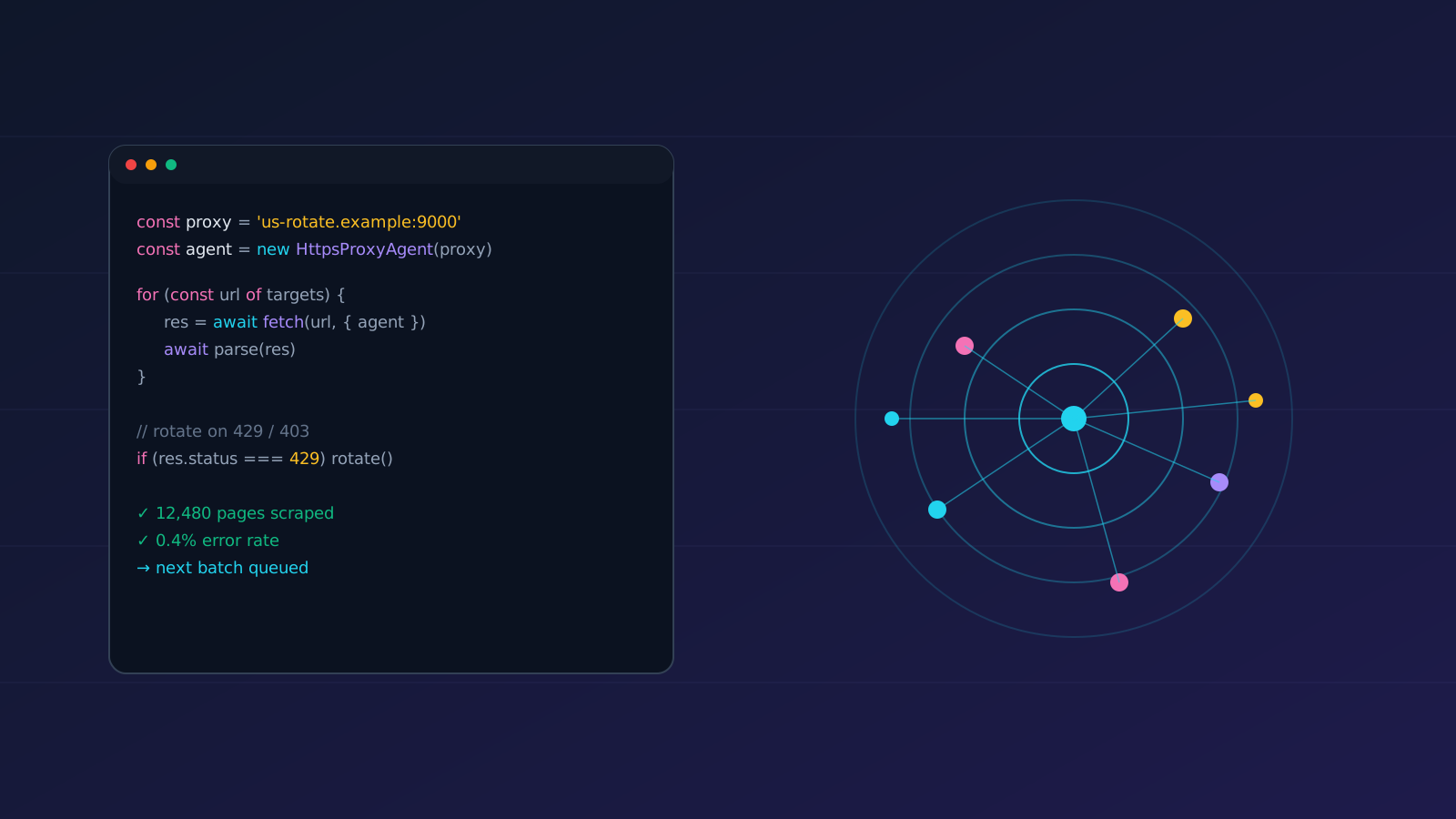
To programmatically bypass rate limits, you must integrate the proxy logic into your request library. The following Python example demonstrates how to use the requests library with a rotating proxy gateway that requires authentication.
import requests
from requests.auth import HTTPProxyAuth

# Replace with your actual proxy provider gateway
proxy_gateway = "http://gw.proxyprovider.com:8000"
proxy_auth = HTTPProxyAuth("username", "password")

proxies = {
    "http": proxy_gateway,
    "https": proxy_gateway,
}

def fetch_content(url):
    try:
        # A new IP is usually assigned per connection by the gateway
        response = requests.get(url, proxies=proxies, auth=proxy_auth, timeout=10)
        if response.status_code == 200:
            print(f"Success! Content length: {len(response.content)}")
        elif response.status_code == 429:
            print("Rate limit hit - the proxy pool should rotate automatically.")
    except Exception as e:
        print(f"Connection error: {e}")

# Example usage
target_url = "https://httpbin.org/ip"
for _ in range(5):
    fetch_content(target_url)
In this snippet, the proxy_gateway handles the rotation logic internally. Every time requests.get() is called, the provider's server picks a fresh IP from their pool of millions. This is significantly more efficient than maintaining a local list of thousands of individual IP addresses and manually cycling through them in your code.
Evaluating Provider Pool Sizes and Performance
When selecting a vendor to help bypass rate limits, the size of the IP pool is the most important metric. A small pool results in "IP collisions," where you are assigned the same IP too frequently, leading to a cumulative rate limit across your entire scraping operation. Large providers like Bright Data and Oxylabs offer pools exceeding 70 million addresses, virtually eliminating the risk of repetition.
Performance Benchmarks: Success Rates by Provider
- Bright Data: 99.2% success rate on Google Search (Residential).
- Oxylabs: 98.9% success rate on Amazon product pages.
- Smartproxy: 97.5% success rate on social media scraping.
- SOAX: 96.2% success rate with high-frequency rotation.
- IPRoyal: 94.8% success rate (Best for niche/long-tail sites).
For those looking for deeply technical reviews of how these providers handle load under pressure, check out vpsrated.com/proxy for up-to-date speed and latency benchmarks.
Managing Headers and Footprints
Rotating your IP address is only half the battle. If you rotate your IP but keep the same User-Agent or TLS signature, the server will still identify your activity as coming from the same bot. You should implement a "Header Rotation" strategy alongside your IP rotation. This involves cycling through a list of common browser headers to mimic a diverse user base.
Furthermore, many sites now use TLS Fingerprinting (JA3) to identify Python's requests library or Node.js's axios. To bypass these sophisticated rate limits, use tools like curl-impersonate or browser-based automation (Puppeteer/Playwright) through a high-quality residential proxy service. You can learn more about securing your scrape environment at 5-proxy.com, which discusses the latest in fingerprint obfuscation.
Cost-Benefit Analysis of Rotation Strategies
Building a custom rotation infrastructure is rarely cost-effective for most businesses. The engineering hours required to scrape, validate, and maintain a proxy list far outweigh the subscription costs of a premium provider. Premium providers offer API endpoints that return JSON data, completely abstracting the proxy management layer.
If you are just starting out, using a tool like proxytrust.site can help you verify if your current proxies are actually anonymous. Often, "transparent" proxies leak your real IP in the X-Forwarded-For header, rendering your rate-limiting bypass efforts useless. Always verify that your provider offers "Elite" or "High Anonymity" proxies that strip all identifying headers.
For professional-grade projects, you might also require unique geolocation targeting. If you are scraping localized data (like Netflix regional libraries or localized Google SERPs), you need a provider that allows you to specify the City or ASN of the rotating IP. You can find specialized tools for this at proxyip.top, which focuses on geo-specific residential infrastructure.
Recommended Deals
- 20% Off All Residential Proxies — Save on massive residential pools for high-scale scraping.
- 1.99 Trial for 100MB — Perfect for testing rotation logic and success rates on new targets.
Integrating Proxies with SEO Tools
Bypassing rate limits is just as important for SEO professionals as it is for data scientists. Tools like Semrush and Ahrefs perform their own crawling, but if you are building custom rank trackers or auditing site speed using Hostinger or other VPS solutions, you need a proxy layer. Using a VPN like NordVPN or ExpressVPN is sufficient for manual browsing, but for high-volume automated SEO tasks, residential proxy rotation is the only way to avoid being blocked by Google’s "Unusual Traffic" errors.
If you are hosting your scrapers on cloud providers, keep in mind that most major websites block IPv6 ranges from popular hosts. Always force your proxy traffic through IPv4 residential gateways to ensure the highest bypass rate. Providers like ProtonVPN offer great security for individual use, but for programmatic bypass, a specialized rotating proxy service is non-negotiable.
FAQ
How many proxies do I need to bypass a site's rate limit?
It depends on the site's threshold. If a site allows 10 requests per minute per IP and you need 1,000 requests per minute, you need at least 100 unique IPs in your rotation pool at any given time to avoid triggers.
Will rotating proxies slow down my scraping speed?
Adding a proxy layer introduces a small amount of latency (usually 50ms to 200ms) because of the extra hop. However, the ability to send hundreds of concurrent requests across different IPs significantly increases your overall data throughput.
Can I use free proxies for rate limiting?
Free proxies are highly discouraged. They are often "honeypots" designed to steal data, and because they are public, their IP addresses are almost universally blacklisted by major websites and CDN providers.
What is the difference between a proxy and a VPN for rate limiting?
A VPN typically gives you one static IP for your entire device, which is easily rate-limited. A rotating proxy service gives you access to a pool of millions of IPs that can be changed for every single request your application makes.
Conclusion
Mastering the art of bypassing rate limits is a requirement for any serious data collection project. By leveraging residential proxy rotation, you transform your automated scripts from suspicious bots into a stream of legitimate-looking traffic. Whether you are using a trial to test the waters or investing in a full residential pool, the key is consistency and anonymity.
Check our full list of proxy coupons to find the best deals on high-performance rotation services today.
Get the weekly ProxyPromo brief
Fresh deals, hand-tested codes and honest reviews — every Friday. No spam.